Blog

  • The first doctoral thesis from Engage

    The first doctoral thesis from Engage


    By Anniken Sanna

    Aadland describes the last four years as fun, and that the great relationships he has with his coworkers at Engage has made the journey a lot easier. “It’s been some long and hard days, of course. It’s not easy to write a doctorate. But it has been four really interesting years. I would probably do it again”, Aadland says while smiling. 

    “Are you nervous about the defence?”

    “I’m starting to feel a little bit nervous now. It’s a lot to prepare before the trial lecture, but I think it will be fine. The questioning afterward, on the other hand, may be the most challenging part. It’s hard to prepare because you never know what they will ask.”

    Torgeir Aadland holding his thesis
    Torgeir Aadland says the last four years have been really interesting.  

    From the summary 

    This thesis explores the assessment of entrepreneurship education. The focus in the thesis is placed on educational design, where student involvement and the students’ real-world interaction stand central since both factors are expected to influence student learning. These two factors and their influence are also expected to affect the assessment of entrepreneurship education, although this is simultaneously depending on the specific objectives of various educational programmes and the assessment methods being applied.

    The thesis contributes to entrepreneurship education assessment literature with knowledge about the potential influences of educational design and contextual influences on the assessment results. This thesis also contributes with knowledge and insights about how education in entrepreneurship and its assessment should be designed with respect to student involvement and students’ interaction with the real-world.

    Open for the public

    On the day of his defence he will hold a trial lecture where he will be talking about issues to consider when designing entrepreneurship courses that include interaction with real-world actor. Then the defence of the thesis will be held. This happens on Friday the 22 November from 10:15am at Disputasrommet, main building, campus Gløshaugen, and will be open for the public. 

    All of Engage wish him good luck and congratulation on completing his PhD-degree!
  • Ntention to the moon

    Ntention to the moon

    By Erik Klevar

    Ntention, formerly known as Arveng Technologies after co-CEO and co-founder Magnus Arveng, have worked on their smart glove for three years. This summer they contemplated giving up on their dream of making human-drone interaction easier through a glove covered in sensors, but now they might be going to the moon in 2024. Ntention is run by Arveng from NTNU School of Entrepreneurhip and several other students from NTNU.

    NASA plans to return to the Moon by 2024 with the Artemis Program, and then send astronauts to Mars. Both missions are expected to include an expansion of surface extra-vehicular activities (EVAs) in both quantity and complexity compared to Apollo. Future planetary spacesuits are expected to improve in nimbleness and comfort over time. But, as pressurized vessels, spacesuits are likely to remain fundamentally cumbersome, limiting the dexterity and precision with which astronauts may perform tasks such as collecting samples and operating robots.

    “A smart glove-equipped spacesuit could be a solution” said Dr Pascal Lee, a planetary scientist with the SETI Institute and the Mars Institute, and director of the NASA Haughton-Mars Project at NASA Ames Research Center. “With it, astronauts could easily control a range of robotic assets, making science and exploration operations on the Moon, Mars and at other destinations more effective and productive”. “When I first saw Ntention’s smart glove in action, I immediately thought of Arthur C. Clarke’s Third Law: ‘Any sufficiently advanced technology is indistinguishable from magic,” recalled Lee. “A pressurized spacesuit is relatively rigid, and hand and finger motions meet with substantial resistance. In the “Astronaut Smart Glove”, the sensitivity of hand motions is adjustable and can be set high, which means the technology might be adaptable to a stiff pressurized spacesuit”.

    The evaluation of the “Astronaut Smart Glove” for Moon and Mars exploration is expected to continue, in particular with applications to the control of other types of robotic assets including robotic manipulators, rovers, and other planetary science and exploration systems. The promising early results obtained this summer might herald a new era in human-robot interactions and space exploration capabilities.

    Ntention has been mentioned in Forbes and last week they were featured and interviewed on TV2s God Morgen Norge, a morning TV show. We want to congratulate Ntention on this milestone and wish them luck in the future!

  • Travelouge: Visit to North Carolina State University

    Travelouge: Visit to North Carolina State University

    By Erik Klevar and Stian Bongard

    We are Erik Klevar and Stian Bongard, two 2nd year students at the NTNU School of Entrepreneurship (NSE). In September we traveled together with three of our classmates and Engage to participate at this year’s Venture Creation Program (VCP) Forum. This year the VCP Forum was hosted by North Carolina State University (NCSU) in the city of Raleigh. The university was represented by professor Steve Barr and the participants this year came from Sweden, Norway and the UK. Last year, in 2018, Engage was the host and Trondheim the host city. 

    The VCP Forum itself lasted for a couple of days and this allowed the institutions to share their experiences and research since last time. Engages Dag Håkon Haneberg and Iselin Kristine Mauseth shared their findings from their PhD-research and invited to discussions. Professor Roger Sørheim shared his findings on how many startups from NSE that still existed in 2018 or their different fates like mergers, acquisitions or bankruptcies. During the stay the students were invited to sit at NCSUs partner, the co-working space and incubator HQ Raleigh. The university had its own co-working space within the co-working space. Professor Barr told us that they had classes here as well. 

    Impressions

    What struck us the most was how similar yet different the US is. We all expected the US to be “bigger” than Norway, which it was, but when we got told that we couldn’t walk where we wanted simply because there were no sidewalks we were very surprised. The public transport system was also very much not existing, a totally different experience than in European cities and Trondheim where buses, trams and subways are seen. This meant that we had to use Uber when we traveled from and to the hotel. The VCP forum was very interesting to listen in on and it was special to meet academics from other countries. We got to tell the Forum about our experiences at the School of Entrepreneurship which gave both our faculty and the other faculties some food for thought and new insight into what they can do to improve their programs even further. 

    The most exciting thing at the VCP Forum was to see the spectrum of venture creation programs from various universities and colleges around the world. Although the different academic programs have mainly the same goals, they have different ways of achieving this goal. One of the highlights of the conference was when the participants discussed challenges and shared best practices among themselves. These sessions led to good academic discussions, with views from both professors and students from the various institutions.

    The students decided to stay for a couple of days after the VCP Forum and were lucky to be there at the same time as the annual Entrepreneurship festival at NCSU, Entrepalooza. This was a day created by students at NCSU and involved a pitching competition with more than $ 2.000, or approx. 18.500 NOK in prize money for two lucky startups. It was very interesting to see the different approaches to pitching and the cultural differences were very interesting to observe. All in all the visit to NCSU was very successful and gave us students a lot of perspective from the academic and American cultural side.

  • Travelouge: Snowrollers trip to Sweden

    Travelouge: Snowrollers trip to Sweden

    By Eva Røgler and Linnea Tveraaen

    Getting ready for international expansion

    We are Linnea and Eva, both students at NTNU School of Entrepreneurship, and we recently visited Southern Sweden for our startup Snowroller.

    The main purpose for the trip was related to the startup, and in that context we visited a new potential partner. The company is a third party logistics provider (3PL) that stores and sends out packages for our company. Because Snowroller want to expand internationally this winter season, we need a 3PL outside of Norway in order to skip toll fees and customs. This visit was important because it is important to build relationships with such partners, and to see for ourselves that the company was serious.

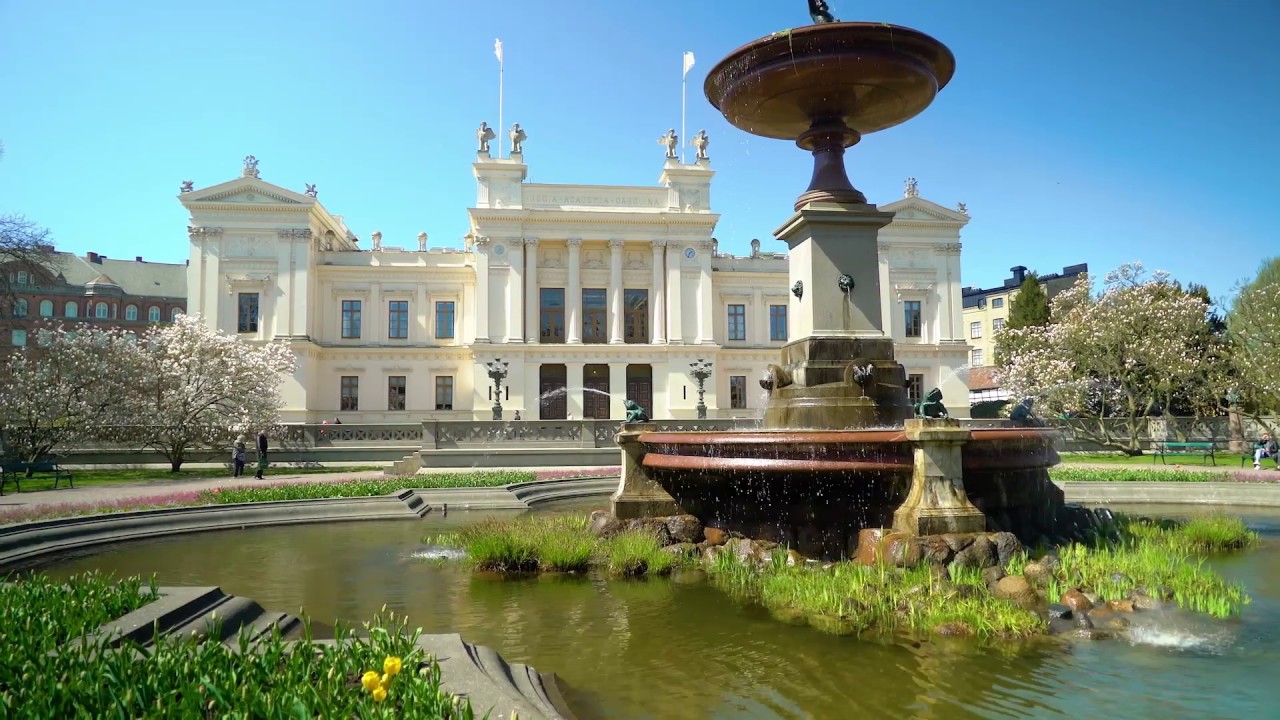
    Lund University – An university for entrepreneurship and innovation

    After the visit, we went to Lund University in order to learn more about how they work with entrepreneurship. Unfortunately we were not able to meet up with professors or students at the university, but we did get to read about their innovation ecosystem and programs.

    Firstly, Lund University has a 1 year master’s program in Entrepreneurship and Innovation. When applying to this programme the student elect either the Entrepreneurship: New Venture Creation track or the Corporate Entrepreneurship and Innovation track. The former is created for students that want to start their own company, and the latter is for people who want to work with innovation in already established companies.

    Secondly, the university also has an incubator called Ideon Innovation incubator. This is a co-working space where students can work on their ventures and get help to grow their businesses.

    This trip was crucial for our company because as we are going to expand to other countries in Scandinavia, we needed a 3PL outside of Norway. After this trip we have established a good relation with our new partner, and are ready to launch our new collection!

    You can learn more about Snowroller at Snowroller.no.

  • DIKU and the SFU’s – two days of important discussions

    DIKU and the SFU’s – two days of important discussions

    By Rebecca Amalie Skogø

    All of the SFU’s in Norway is funded by DIKU (Norwegian Agency for International Cooperation and Quality Enhancement in Higher Education), and each year the 8 current centre within this prestigious national initiative for higher education, gather for a couple of days each semester for discussions, academic refill and social happenings. This semester NTNU was the host of this important happening, in the heart of the entrepreneurial ecosystem at Fram.

    Monday 21st of October

    Monday started out in the student spirit with a “student meeting” with representatives from the different centres. At this meeting the students discussed how they worked with the centres, how to claim a position, as well as the students from Excited and Engage shared some of their projects they are currently working on.

    As several of the SFU’s have travelled to come to Trondheim for this meeting, the main meeting started out with a welcome introduction of each centre with a short presentation of what each centre is currently applying to their work that they are particularly proud of. This included everything from student initiative, research being executed, and new models of teaching.

    Continuing the day, Center Director Øystein Widding and representatives from Engage gave a workshop in entrepreneurial mindset with an educational teamwork exercise showing how much both cooperation and individuality play a role in success – a task that is relevant no matter what sector you work in.

    The last part of the day was used to discuss both the annual report and the half-way evaluation many of the centres are soon facing, and how to best tackle this enormous task they are about to embark. Interesting discussions and opinions where voiced, leaving everyone with many new thoughts. The day ended in a social and intimate dinner at Scandic Lerkendal.

    Tuesday 22nd of October

    Day two startet 09:00, bright and early! Torgny Roxå from Lund University and Oddfrid Førland from University of Bergen talked about how to document cultural change, and in what degree it can be documented.

    The later part of the morning was used to sharing experiences and collaboration. Different tables were presented with different discussions about Teaching Methodology, Entrepreneurial mindset, Evaluation Framework, Cultural change in higher education, and “The word is free”.

    Interested in learning more about the other SFU’s? Follow these links:

  • Gründerbrakka: A great initiative that facilitates the development of knowledge-based business ideas

    Gründerbrakka: A great initiative that facilitates the development of knowledge-based business ideas

    By Anniken Sanda

    Gründerbrakka’s purpose is to provide work space for the most ambitious student driven startup companies at NTNU.

    If you want to work on your own business after graduation this is the place you should be. As a member of the Gründerbrakka, an office space is also allocated which makes it more efficient for a start-up company from a university environment to work together as a team in a critical development phase, says Simen.

    Simen Roel Kalfstad is the new managing director of Gründerbrakka. He started this fall after he himself started a business while he was a student at NTNU.

    A social place

    Gründerbrakka is meant to function as a transition between being a student and a full time entrepreneur. Previously, startups had to rent offices or move between group rooms at NTNU – now there is a designated space where they can stay in up to a year. Each semester new businesses started by students at NTNU can apply for an office at Gründerbrakka. Gründerbrakka does not only offer office space for the student-started businesses, but also a place where you meet and socialize with other students with innovative ideas. “There is always someone here, so no matter when you come it is social and a good place to develop your business further”, says Simen Roel Kafstad.

    Do you want to know more about Gründerbrakka? Read here.

    Goalkeeper

    Goalkeeper is a workout web-app that allows individuals or groups to set an activity goal and then bet money on accomplishing this. Those who fail to accomplish the goal lose the bet, those who complete their goal wins the money. Their goal is to give the whole world an extra push up from the couch.

    Everyone at Gründerbrakka is engaged. The office place help us to establish a network in the innovative environment, which makes Gründerbrakka a unique place to be

    Trym, from Goalkeeper
    Trym from Goalkeeper
    Trym from Goalkeeper

    Costail

    Costail are creating technical cosplay accessories. Their first product is the world’s first electric autonomous tail. The tail moves automatically, adding movement and life to the cosplay outfit.

    Here at Gründerbrakka we become part of a larger innovative environment which is very useful. Everyone helps each other

    Vetle Sagsvold Øien, from Costail

    Vetle Sagsvold Øien from Costail shows the electric tail. When a customer buys the tail, they can choose their own fabric and design. This makes the tail fit all costumes. 

    Vetle from Costail
    Vetle from Costail

    Metaito and Factsplat

    Metaito is a young software development company that focuses on combining information into lasting knowledge. Metatio have developed the platform Factsplat. Factsplat is a platform for organizing and sharing information and tools on the internet.

    The office spaces at Gründerbrakka makes it easier to develop our company and work more efficiently

    Svenn-Helge Vatne, from Metaito
    Svenn Helge from Metaito
    Svenn Helge from Metaito

    Learn more abou Metaito here.

  • Norwegian forum for entrepreneurship education

    Norwegian forum for entrepreneurship education

    Av Eirik Medbø

    Faglig påfyll – Seminar torsdag 10. oktober:

    Med Heidi Neck og Candida Brush fra Babson College
    – Inspirasjon
    – Workshops
    – Verktøy for bruk i klasserommet

    Etter seminaret er det mulighet for omvisning på NTNUs Entreprenørskole og Gründerbrakka. Etterpå blir det felles middag på kvelden.

    Nettverk – Workshop fredag 11. oktober:

    Engage ønsker å ta initativ til et nettverk for undervisere i entreprenørskap på høyskoler og universiteter i Norge.

    Fokusområder:
    – Utveksling av ideer og samarbeid for utvikling av undervisning
    – Samarbeid om vurdering og sensur i emner
    – Forskningssamarbeid
    – Felles innspill til nasjonale prosesser rundt entreprenørskap i
    høyere utdanning

    Vi diskuterer form, rammer og ambisjon for et norsk nettverk for
    entreprenørskap-undervisere i Norge.


    Program 

    Torsdag 10. oktober:

    10:00 – 10:30: Introductions & Program Overview

    10:30 – 12:00 The Practices of Entrepreneurship Education

    Based on their book Teaching Entrepreneurship, Candy and Heidi describe how building in the practices of play, creation, experimentation, empathy, and reflection in your classroom can help develop the entrepreneurial mindset of students. Participants will experience each practice! 

    12:00 – 13:00 Lunch

    13:00 – 14:30 Mini-cases in Entrepreneurship Education

    The traditional case study as a pedagogical tool has been replaced with more action-based exercises and projects.However, the power of the case method to develop the critical thinking skills of students can still be useful in a “mini-case” format. The effectiveness of a mini-case is demonstrated.

    14:30 – 15:00 Break

    15:00 – 16:30 Creating Experiential Exercises: A Game Design Approach

    In order to teach entrepreneurially, we all need to design and build new exercises. This session will challenge participants to create exercises so students can practice entrepreneurship inside the classroom.This is a game design competition and there will be winners!

    16:30 – 16:45 Avslutning

    Kveld:

    Middag i Trondheim sentrum

    Fredag 11. oktober: 

    08:30-09:15: NTNUs Entreprenørskole – syretest-presentasjoner

    Studentgrupper ved NTNUs Entreprenørskole presenterer forretningsmuligheter som har blitt undersøkt gjennom én intensiv uke; kundeinteresse, mulig forretningsmodell, markedspotensiale mm.

    09:30-11:00: Presentasjon av DITT kurs eller studieprogram

    Hvordan underviser DU, og hvem er studentene dine? Hvert deltakende emne/studie presenterer sin egen undervisning

    11:00-12:00: Workshop: Samarbeidsmuligheter i Norge

    Hva kan vi tjene på å samarbeide? Hvilke temaer burde vi samarbeide om? Hvordan bør undervisning i Entreprenørskap utvikles videre i Norge?

    12:00-13:00: Lunsj

    13:00-14:00: Etablering av nettverk for Entreprenørskaps-undervisere i Norge

    Hvem ønsker å være med i et norsk nettverk? Hvordan skal det organiseres, og hva skal ambisjonen være?

  • New fund for student ideas within energy – open for applications

    New fund for student ideas within energy – open for applications

    By Eirik G. Medbø

    What can the money be used for?

    The money can be used to free up time for employees or for further development, renting lab time, buying equipment or consulting services for an early-stage prototype, and to do market research to understand the market you are addressing.

    Requirements for you as the inventor and the idea:

    • The idea is developed by you as a student or PhD student, and is owned by yourself as a student, or NTNU/SINTEF.
    • The idea could contribute in solving challenges within the future energy system or help create a sustainable energy transition, and has a high potential. This could for instance be solutions that aim to:
    • Increase energy efficiency
      • Reduce emissions from burning fossil fuels
      • Technologies that contribute to better energy production, storage or transfer
      • More sustainable or efficient use of materials and resources
    • Solutions that could have a direct impact for consumers, are encouraged to apply.
    • The idea could be in an early stage, but the project should focus on commercializing the idea through for instance a new company. The support can not be used for research purposes.
    • You have a desire to develop the idea towards future commercial use, and you want to contribute actively in the journey ahead.
    • The support is given for a 6-month project that you define yourself, where you can apply for between 50.000 and 150.000 kroner to get over an important hurdle or reach a milestone, to get that one step further. You will also get help investigating subjects like market research, strategy and recruitment of team members.

    How do I apply?

    You apply through filling out this application (in English or Norwegian), and send it to eirik.g.medbo@ntnu.no. The grant winners will be announced at UKA in the beginning of October, 2019.

    The deadline to apply is september 15th 2019, at 12:00.

    If you have questions about the application or the grant itself, please contact Innovation Manager at NTNU Energy Transition / Engage, Eirik Gjelsvik Medbø (eirik.g.medbo@ntnu.no)

  • Travelouge – Boston and Babson College

    Travelouge – Boston and Babson College

    By Lars Henrik Hafstad Karlsson, Nord University

    I am Lars Henrik Hafstad Karlsson, a third year economy student at Nord University. I have a passion for entrepreneurship and for me it’s not about if I should start a company but rather when I am going to start my first. With this as a backdrop, I started taking several courses in the entrepreneurship field as a part of my educational profile, international entrepreneurship.

    Lars Henrik receives his diploma for participating
    Lars Henrik receives his diploma

    I participated in 2018 Venture Cup where I went to the regional finale. With the same business idea I applied to join a trip to Boston and Babson College. I thought it was a fantastic opportunity – to travel to such a prestigious entrepreneurship school to work with my business idea. I wanted to learn and learn from the best.

    Before travelling we had to do two things; read a couple of articles and prepare a five minute presentation. All participants had to some degree presented business ideas earlier, but few had done so in English. For several of us this was outside our comfort zone, including me. I was however very excited to challenge myself and prepared well in advance.

    Saturday the 6th of April at 6.30 in the morning we met at the airport and were ready for departure. First we flew from Bodø to Oslo, from Oslo to Reykjavik and lastly from Reykjavik to Boston. The total travel time was about 19 hours including the waiting time. We landed in Boston in the evening and had a meal at the hotel restaurant. Already there we got our first experience with the American unfamiliar tax system. We still don’t understand it. Essentially the prices on the menu are not the same as are on the receipts.

    We had a few days without a program at Babson College, but we still managed to keep busy. On Sunday most of us travelled to Wrentham Village Premium Outlets while the rest wanted to explore the city. The Outlet is a small village with different stores consisting of rather expensive designer clothing but with reduced prices. At that point the US tax system seemed even less understandable, but the shopping experience itself was delightful. Even though none of us is that interested in basketball we still made our way to watch Boston Celtics meet Orlando Magic in the NBA. It was a great experience I would recommend everyone who visit the US.

    Lars Henrik presenting his business idea
    Lars Henrik presenting his business idea

    The day after, monday the 8th of April we visited Boston Consulting Group, one of the world’s largest consultancy companies. We met one of the project managers at BCG, Ezra Ok, who told us in a very interesting and engaging manner what their company did. The high point of the meet was when some founders in my travel group got consulting from Okon himself and advice on how to analyze demand, financing, competition and resources. A very meaningful meeting for everyone.

  • Engage Annual Report 2018

    Engage Annual Report 2018

    In our annual report you can learn more about Engages achievements in 2018, our student community and educators, the research being done in our centre, as well as the impact of Engage. But thats just a few of the headlines! This 58 pages long report contains interesting information and facts about everything you need to know about Engage.

    Download:

    Engage-Annual-Report-2018-1