Blog

  • Travelogue: WAID visit to Barcelona

    Travelogue: WAID visit to Barcelona

    By Jonas Aakenes

    A student from the NTNU School of Entrepreneurship, Jonas Aakenes, recently visited Barcelona to find international clients for his own startup that makes HRM and preparedness software for humanitarian organizations. Also, he used his time to find entrepreneurship educations and Venture Creating programs.

    The startup WAID from NTNU School of Entrepreneurship recently started collaborating with the Norwegian Red Cross to develop a preparedness system for humanitarian organizations, and to explore an international market for such a software, as well as looking for industry knowledge, Jonas went to Barcelona to follow up some leads there. This led him to visit different organizations, like Doctors Without Borders, The Red Cross (both Spanish and Catalan) and Oxfam. It looks like “dugnad” (a Norwegian word for the act of volunteer collaboration) also is strong in Barcelona.

    Photo by Jonas Aakenes: A protestor supporting Catalonian independence from Spain

    Additionally, Jonas visited and got a sneak peek on two softwares that are addressing the same challenges that WAID want to do. Symphony is a HR management software made specifically for Doctors Without Borders, with the same vision as WAID; to make humanitarian workers available. They are these days implementing the software in the HQ in Barcelona as the first MSF operational center to do so. This implementation and the experiences of doing so will be key for Symphony to proceed their vision, and they were willing to share these experiences with us. This will be interesting insights for WAID to also proceed their path. As well the Homere system is in use in MSF, but specifically used for workers in the field.

    The search for a Venture Creation Program led to the Harbour.Space University. Harbour.Space is a small university in Barcelona that strive to be close to new industry knowledge. Therefore, they are organized in a way that makes it easy for industry partners to hold courses. This includes dividing the year up in 15 periods instead of two semesters, each one lasting between 1-3 weeks. These intensive courses are lectured by industry partners that come here to lecture specific topics. You can find courses and lecturers on their website, www.harbour.space. The university consists of only 200 students from 30 different nationalities, focusing on high-tech entrepreneurship and digital marketing. Everyone needs to submit a business idea to apply, and the administration push for the students to start up something during the 1-year masters. One example is BANKI, started up by a Swedish student. Little is facilitated by the university for the students to find an idea and a team, so the students need to take the initiative themselves for finding co- founders and practical challenges of starting up. And indeed, they do. The external industry lecturers usually help out and mentor students when in need. In the future Harbour.Space is initiating a collaboration with Stanford university, getting lecturers from there, as well as opening a new campus in Bangkok with a university located there, the UTCC. Jonas is coming home with new insights and potentially new collaboration partners when returning to Norway.

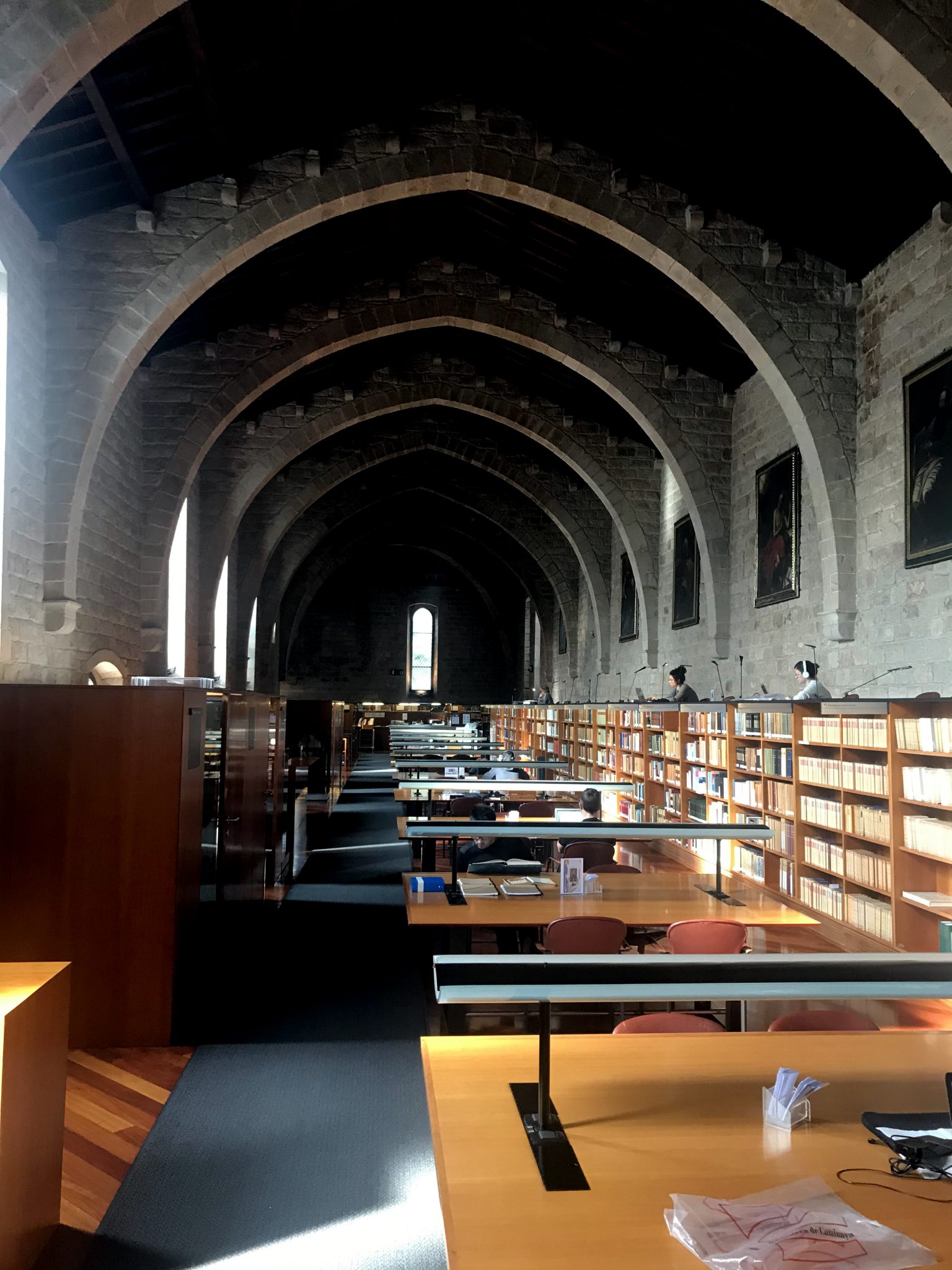
    The study hall at Harber.Space
    Photo by Jonas Aakenes: The study hall at Harber.Space
  • Kvinneprosjektet – Inspiring women

    Kvinneprosjektet – Inspiring women

    By Erik Klevar

    The 1st of November saw Kvinneprosjektets (The Women’s Project) kick-off at DNBs office in Trondheim. A hundred or so young women and a handful of men were attending to learn more about entrepreneurship and meet like-minded individuals.  

    Kvinneprosjektet wants to inspire more women to pursue an entrepreneurial career. Today was about showing that there are plenty of role models for female entrepreneurs in the world and Norway even though they are by far outnumbered by their male colleagues.

    The kick-off featured profiled female entrepreneurs like Kimberly Larsen, the founder of freelancer platform TimetoRIOT and Silje Landevåg who is the brains behind the webshop Get Inspired, one of Norway’s biggest online retailers. 

    Selma Selbæk and Elise Irgens from Engage and Silje Granås from Spark* are the people behind the project who have worked tirelessly for several months to make Kvinneprosjektet a reality. Selma took some time to comment on the background and future of the project.

    Kvinneprosjektet originally started as a Spark* project. A research study showed that only 11% of the people who utilized startup guidance from Spark* were women and these numbers are also common in the private sector. Only 3 out of 10 Norwegian founders were women! There is no good reason as to why it should be like this and it’s not good for business or the development of our society.  

    Selma Selbæk is one of the engines behind Kvinneprojektet.
    Selma Selbæk is one of the engines behind Kvinneprojektet.

    With this as a background, we started Kvinneprosjektet and our vision is to inspire more female students to venture out on their startup dream. Vetle Øien and Elise Marie Irgens conducted the research study that showed the significant lack of female founders in Spark*’s pool of entrepreneurs. Elise took her project to Engage who today is financing the project. In January myself and Silje Beckmann Granås were recruited to the project group, Silje is employed in Spark* and a student at STS (Senter for Teknologi og Samfunn) and I am a student of medicine. My entry was the involvement I’ve had with Start NTNU for the last two years. Together with Elise, who is now employed at the School of Entrepreneurship, we have worked together on the function and vision of Kvinneprosjektet.

    Raja Skogland is one of the leading women in Norway when it comes to fintech. She talked a great deal about the importance of having the right passion when launching new ventures and believes that this is what separates those who succeed and who don´t.  

    It was a challenge to find our place within the university innovation ecosystem, but we have been met with support and a lot of goodwill. After the kick-off we are sure that Kvinneprosjektet is a project that deserves to live. In August we got DNB as a partner. Their focus on equality and their campaign on female finance investments corresponds well with our vision. For the spring we will have a solid amount of events going on. First of all, we will have a five-part lecture series for female students who want defined tools on the journey from idea to sustainable business. In the end, we will have a competition in using these tools and the group with the best idea will get a big prize. In parallel, we are going to arrange some inspirational lectures with well known female entrepreneurs and known female business leaders.

    We also aim to have lowkey social meetings where we can focus on network building, idea exchanges and good food. The program for the spring semester is beginning in February and all our events will be posted at our Facebook page. 

    NTNU School of Entrepreneurship alum Viljar Rystad from his design sprint consultancy Løpe gave the young hopefuls an introduction to design sprints. 

    With a workshop where the goal was to give the participants insight into the importance of early prototyping when you want to create a product. Before you start building a product you must know that the customers want it. 

    All women should come by one of our events even if they don’t want to start their own business. There is a lot of learning going on and many exciting people to meet. The best thing about this kick off was that almost 100 young women decided to sacrifice their Halloween party, pizza night or Friday night out to come. This shows that there is a need and interest and it gives us the motivation to keep on working and scale the project up. There are a lot of resourceful young women with a business founder within them and I hope I get to meet a lot of them this spring and read about them in Dagens Næringsliv in a few years.

    You can follow Kvinneprosjektets Facebook-page here.

    All pictures by: Peter Fistonic/Spark* NTNU

  • The inner changemaker – a personal story

    The inner changemaker – a personal story

    By Elise Landsem, former student at School of Entrepreneurship at NTNU and currently the CMO of the startup Folkeinvest and board member and web responsible at the NGO Amigitos.

    Through my studies at NTNU School of Entrepreneurship, my inner changemaker got “smashed under a bulldozer” and then empowered into a core of who I am.

    The Bosnia war was at its worst when I was a small kid. Through the news, sharing horrible and heartbreaking stories, that war had a severe impact on me. I am sure of it because I so clearly remember one dream I had. I was six years old and nervously entering a gigantic podium, cameras everywhere producing TV for the whole world. Although I don’t think I knew about the speech “I have a dream” by Martin Luther King Jr. at that point, the scene was surprisingly similar. In a naive tone that only a child would dear to use, I used every word that I knew to convince the world that it doesn’t make any sense to keep wars going. “Imagine how great we can all be together”.

    Passion seeking mission

    Throughout my teenage years I never really found a place to use this passion for change and improvement. It drowned in sports, homework, friends, boys and all the other things that occupies your brain at that age. In 2010 I began my journey at NTNU. I studied for a master’s in chemistry, lived with my boyfriend, played volleyball and life was in general very stable.

    Nudge by nudge, the student environment filled with energy, motivation and engagement changed me. Coincidences led me to student politics, and to a year as a board member at the university. I was not even a little bit prepared for the challenges I met that year or all the huge jumps I had to take far out of my comfort zone. If earth was my original comfort zone, I went to another galaxy at least once each week. That’s an immensely scary place to be, but it is also where you really get to know yourself for better and for worse.

    A school for changemakers

    I almost didn’t apply for NTNU School of Entrepreneurship (NSE). It was the only thing I wanted, but I was scared I wasn’t good enough. Having friends pushing me out of my comfort zone yet again is the reason I eventually got to study at “the school for changemakers”.

    Through my years at NSE I was challenged on every aspect of myself. It was hard to maintain a level of self-confidence, coming from quantum chemistry and being completely new to the field of entrepreneurship and innovation. Me and my fellow students were thrown out on deep water from the very beginning, with the task of evaluating business ideas in less than a week. Stress levels were high, the deadlines absolute and the groups were an interesting mix of strong personalities. It didn’t take long for these “experiments” to reveal the individual strong and weak characteristics, both in skillset and personality.

    During the first semester I was more daring than I thought I ever would, I stood upright in moments filled with insecurity, I sometimes pushed myself too far, I cried of laughter, stress and exhaustion. I think everyone else did too, and for every experience our comfort zone grew by some inches.

    Elise Landsem and the kids
    Elise Landsem and the kids

    Learning by doing, reading and socializing

    What makes NSE such a special study is the way you develop both knowledge, skills and understanding of yourself all at once. You study academic topics while you start your own (often first) business being surrounded by inspiring people. Coffee breaks are used to discuss technological trends, global issues, personal challenges and how to learn and develop specific skills. The startups are bootstrapped, forcing you to take on tasks without necessarily having a clue where to start. Going through the different topics you build up an overall understanding of building a business, and a sort of confidence to dive into unknown territory.

    During a summer program at Boston University we were challenged by one professor, Peter Marton. “What is your deepest, honest reason for wanting to be an entrepreneur?”. He underlined the importance of being honest with oneself, and of knowing your own why. The answers ranged from Freedom and Helping others, to Money and Fame. I thought about this question every single day for a long time. Immediately my response was “improving the lives of others”, but how could I know for sure?

    It took a while…

    The following one and a half year I started navigating my life with an aim of answering this exact question. It had a rough start, where I first quit my job as a CMO in Technium as I “didn’t feel it” and then had a complete crash with a back aching 24/7. I choose to work for Framtiden i våre hender (a Norwegian NGO) one summer and to travel to the Dominican Republic volunteering for Amigitos (a Norwegian NGO) the following fall. I worked one year in the research institute SINTEF, and took part of Telenor Youth Forum as a Norwegian delegate.

    My LinkedIn profile doesn’t make sense for everyone, but for myself I can see the basis being my search for the answer to Peters question. It is my core to fight for what I believe in and to work in a place and role that allows me to take part of impatient, positive change. And through all the experiences I now told you about, I’ve gone from a girl always having 10-year-plans in place to a woman seeking freedom, adventure and possibilities.

    Elise Landsem at departure
    Elise Landsem at departure

    Embrace challenges and the unknown

    Without the experiences at NSE I would probably be drawn back into a stable, organized and predictable life. I wouldn’t have followed my dream of experiencing a life completely different from my own, and I would definitely not have dared to work full-time in a startup where it seems like everything changes on a daily basis. Today, I am an active board member and volunteer at Amigitos, a Norwegian NGO working to improve the lives of Haitian refugees in the Dominican Republic. It fills my life with more joy and meaning than I could ever hope for. I am also incredibly lucky to be the marketing manager in Folkeinvest, a startup with an altruistic approach to solving the challenge of getting risk capital for young companies and involving a broader spectrum of the population. These companies and the changemakers in them are all trying to change the world, one step at the time, and we cheer them on!

    Some non-quality-assured advice

    If you are on the stepping stone of entering the “changemaker path” to new galaxies of instability, insecurity, challenges and adventures, I thought I could wrap this up by telling you what I would have said to my 5 years younger self.

    First things first – you will get a million tons of advice on your journey, in the end you have to trust yourself on which ones you follow and which ones you don’t. That being said, my advice is to dare to dream big and dare to pursue the dreams that are right for you. It’s a rollercoaster ride with highs and lows, but it’s what makes life the adventure it deserves to be. In all the madness you encounter, remember to be your absolute best friend.

    Now, find that inner changemaker in you and “be the change you want to see in the world”.

    But remember, you can’t change it all in one day, and you can’t do it alone.

  • NTNU towards acting entreprenurial

    NTNU towards acting entreprenurial

    By Erik Klevar

    The project is called “Fremtidens ingeniørstudier” or the engineering programs of the future. The former dean of the Faculty of Information Technology, Mathematics, and Electrical Engineering Geir Øien is the person who has taken the reins of the project. He is picking out the key areas and people for the next two years where the first part of the project will look at the strengths and weaknesses of the current portfolio of programs at NTNU.

    Engage is represented by Professor Øystein Widding, the Centre Director. This means that Engage has taken a role at the project board table to make sure that Engages viewpoints are represented and highlighted for discussion.

    Øystein Widding

    For this project, I’m wearing two hats. One is that of Engage and another is as a representative of NTNU School of Entrepreneurship (NSE)

    Øystein Widding, Center Director at Engage

    “We will contribute with our viewpoints on education and especially our pedagogical model and leadership philosophy. We believe that people have noticed our way of working and the results that we can point to. For example, the School of Entrepreneurship and Spark*, both partners at Engage, have a lot of movement these days and when we look at the different IT programs at NTNU one can see if there are possibilities to improve the traditional model with elements from NSE”, says Widding.

    The ambition of the project is high, and it has been more than 25 years since a change this big has been implemented in the engineering programs at NTNU. Professor Widding stresses that Engages part should not be to push their methods and thoughts but rather contribute to the discussion and give new viewpoints. While the expectation is that the changes should be significant, it is important to be aware of the fact that students still should have the amount of professional knowledge that is expected of students from NTNU.

    “There are a lot of things that could be changed, for example how we interact with the private sector, how students are in practise, be more flexible in choosing courses. Another question is how rigid we should be. Today students are expected to have a progression, for example with Math 1, 2, 3 etc. and students become experts over the years. One can go really in depth. At schools like Harvard School of Engineering and Applied Sciences you are more flexible, and it is the degree that counts more than the individual courses. Perhaps this is a direction we can look into”, says Widding

    One of Engages priorities is to provide knowledge and tools that lecturers and teachers can use in their workday to give students the knowledge and entrepreneurial skills that can be useful. Of course, within the entrepreneurship context and this could mean that Engage can contribute with “Training the Trainers” if programs are changed to include a bigger entrepreneurial focus or the pedagogical model is closer to that of NSE. As a by-product of this project Engage will get to show why Engage and entrepreneurship education is important. More research possibilities could open when a bigger part of the student mass is exposed to the methods and philosophies used and practiced at Engage and its partners.

  • The first year of Spark* Nord

    The first year of Spark* Nord

    Spark Nord started with inspiration from Spark NTNU, and has in less than a year grown to become a mentoring service with four mentors and 14 active start-ups

    By Synne Hansen

    The mentors are students with start-up experience who call themselves “buddies with knowledge”. “The whole point of Spark Nord is to give students with an idea, a low-threshold offer when they need guidance and help,” says leader Ole Albrekt Egeland. “We have full confidentiality and we hope that we can push the start-ups in the right direction!”

    Since the beginning in February of 2019, Spark Nord has seen that there was a need for them. Now, they are working on standardizing their methods and reaching out to even more students. “We meet with our start-ups approximately every two-to-three weeks to see how they are doing and try to help them solve new problems that may have occurred,” Michal Meyer Nilssen tells passionately. He’s one of the initiative takers for Spark Nord and has been around since the beginning. “We try to challenge their thoughts around the ideas they bring in and, in that manner, we work more with the people than with their concrete ideas.” 

    One of the start-ups mentored by Spark Nord is Universo Gallaecia, driven by Néstor Teixeiro Garrido. As one of many entrepreneurs, Néstor is trying to help solve the environmental crisis we see in the world today. “I started my project and got a patent in Spain, but chose to come to Bodø to develop the rest of the company,” he tells. “The opportunities are great here thanks to initiatives like Spark Nord.” Néstor says that he would like to become a mentor himself one day, but he would want to learn some more Norwegian first. 

    As well as mentoring, Spark Nord also host events, workshops and gatherings. “We want our start-ups to know each other and feel comfortable enough with each other to be able to share experience and learn from the other teams in the group,” explains Ole Albrekt Egeland. For the year to come, Ole and the team are looking forward to have even more activities planned out for their members. “We hope the fellowship we have started here will develop further and that Spark Nord continues to grow!”

  • 5 good things to know when exploring entrepreneurship in Boston

    5 good things to know when exploring entrepreneurship in Boston

    By Karoline Saastad. Translated by Rebecca Amalie Skogø.

    Hello, my name is Karoline. I’m a student at NTNU School of Entrepreneurship and co-founder of the startup WAID. During the summer of 2019, I went to Boston as part of Gründerskolen – a summer school designed for students wanting to learn more about entrepreneurship. And that’s why I’m here in Boston, but also to see what kind of opportunities there is for my startup in the US.

    The team behind WAID. Kristi, Jonas and me (Karoline)
    The team behind WAID. Kristi, Jonas and me (Karoline)

    Boston is known for its ecosystem for entrepreneurship and is one of the most important ones in USA – especially within the field of robotics, medtech and biotech. Boston is also one of the biggest when it comes to science and technology as well – which makes sense seeing that both Harvard and MIT is located here. By enthusiast, Boston’s environment is described as a young and engaged community. There are approximately 2500 startups and a vast amount of resources available for everyone with an entrepreneurial mindset.

    As a student in Boston for only 10 weeks, the amount of resources and information feels overwhelming. I therefore wish to contribute with five essential tips for everyone that wishes to orient themselves in this exciting and gigantic ecosystem when having a limited amount of time.

    Top 5 resources in Boston

    1. The Universities

    Boston is known as one of the biggest universities in the world. At the tip of your fingers you have expertise from the world’s leading universities and professors at Harvard, MIT and Babson. For students coming from NTNU its good to know that NTNU have a strong and close relationship with Boston University. My tip is to reach out to professors in the fields you want to learn more about.

    2. Accelerators and co-working spaces

    While studying at Boston University, I spent a lot of time at BUild Lab. This is only one of many accelerators and co-working spaces you can benefit from (as long as you ask nicely, of course). At BUild Lab you’ll find many exciting startups, people with knowledge about the startup environment, and people with expertise in different disciplines. Other places I would recommend you to visit is Harvard’s iLad, The Cambridge Innovation Center and MassChallenge.

    3. Events and meetups

    Boston is a city made to entrepreneurship. Therefore there are tons of events you can go to everyday. My tip is to have an agenda about what you want to learn more about, and seek out events that is relevant for exactly that. In Boston everyone uses Eventbrite and Boston Calendar, so probably a good idea to check this out. I would also recommend Venture Cafè, General Assembly and Boston TechJam. This are places you can visit to get a better idea of how the ecosystem works while also expanding your own network. Venture Cafè and General Assembly host also courses and lectures.

    4. Mentors and experts

    As part of Gründerskolen, everyone were assigned a mentor in one’s field of interest. If you go to Boston on your own, there are other possibilities to get in touch with possible mentores and experts both at the universities, accelerators, co-working spaces and events. I perceived the people in Boston as very forthcoming, and most people love to talk about what they know. At events such as Venture Cafè and General Assembly, I experiences that people showed interest in mentoring if you’re open for it. There are several perks to this. When you’re staying for a short period of time, this will create a shortcut to relevant events, the opportunity to have direct contact with relevant people, and to create ways of find expertise you would otherwise find as easily.

    5. Go out of your comfort zone

    My last and probably most important tip is to go outside your comfort zone. Get rid of your Norwegian habits, and go and talk to strangers and ask for help! In the US, people are much more helpful and open, and they want to help you. Dare to contact strangers! But keep in mind how you use your time. I experienced that people are more than willing to listen to what you have to say, but they also love to tell you what they do. To create a more effective networking session, you need to be clear about what you need, what you want to learn, what you need help with, and last but not least – know when to wrap up the conversation.

    I hope my tips will help anyone wanting to go to Boston – not only by giving you the knowledge about the opportunities you can explore in the city, but also help you kickstart your stay.

    Eva and Solveig visiting MassChallenge
    Eva and Solveig visiting MassChallenge
    Anne and Bess expand their network at Venture Cafè
    Anne and Bess expand their network at Venture Cafè

  • 3E 2020 CALL FOR ABSTRACTS

    3E 2020 CALL FOR ABSTRACTS

    By Erik Klevar

    Last year 3E was hosted in Gothenburg and featured 43 research papers and 22 practitioner development workshops that were presented to the conference participants. This year’s conference theme is Developing entrepreneurial mindsets through education and will be the ultimate guide line for researchers wishing to present their research at next year’s conference.

    Abstracts should include the following information:

    • importance of the topic for entrepreneurship education research and/or practice
    • questions, challenges and problems to be asked and addressed
    • originality and newness of the approach

    Are you interested in sharing your research? Read more about the 3E-conference on the ECSB website.

  • Spark* is expanding

    Spark* is expanding

    By Engage

    Spark* NTNU was established as an organization in 2014, with the goal to help students who have a business idea. The difference between other organizations at NTNU aiming at helping Start-ups, was that this was fully organized by students. This was one of the first organizations providing student-to-student mentoring in how to establish and run a business as a student. Throughout the years, many successful start-up companies has evolved from this organization, such as Gobi, Tise, Ludenso and many many others. In total, there has been over 400 start-up ideas being mentored by Spark* in the last 5 years, consisting of over 1500 students.  

    When Spark* became a partner in Engage in 2016 one of the main goals was to establish Spark* as an organization in other parts of Norway. This was mainly Ålesund, Gjøvik and Nord University as Ålesund and Gjøvik are part of NTNU and Nord University is a partner in Engage. When this task was established it took a while before the actual work started.  

    Expanding in the North

    In the end of 2018 the work began at Nord University, Spark* Nord. Throughout the spring of 2019, the organization managed to establish the employees that could do the necessary work. This was a milestone as it proved that the structure of the organization was scalable.  

    In June 2019, Christian Ringstad Schultz, the former vice president and event-manager at Spark* NTNU, was hired to bring Spark* to new areas. “The first thing that needed to be done was to establish what is necessary when establishing a new organization. What I discovered was three parts; engaged students, employees at the university that can provide trust to the organization and a financial partner”, says Ringstad Schultz.

    Christian Ringstad Schultz was hired to bring Spark* to new areas.
    Christian Ringstad Schultz was hired to bring Spark* to new areas. 

    With these three parts in mind he began working closely with Spark* Nord to secure that they both had the employees needed to grow and the financial backing. This led to an organization that now is financially backed by Sparebank1 and has had tremendous growth in a number of start-ups from September to November.

    Christian also started the work of establishing Spark* in more areas as he had researched the need in other areas. “Early on we found out that Gjøvik was a little too small at the moment so we focused on Ålesund. Here we found a person that had the drive to pull the organization through. Unfortunately, it didn’t go as planned so Ålesund is back to scratch”, Schultz continues. Even though things didn’t go as planned, the organization has grown bigger than ever. In the last two months both Chalmers in Gothenburg and USN in Bø has started the planning on how they can establish Spark*. Here, the foundation of students is good. They have employees willing to work with the organization and they have potential financial backing.  

    “What’s really interesting and engaging about this is that both of these places has contacted us. They are willing to put the work down and there is a demand for such an organization in both these places. Another area we are establishing Spark* at the moment is Mo i Rana, which will be a division of Spark* Nord. This has never been done before, but if proven successful, it can be a great way to establish smaller organizations in smaller areas without the need of an administrative center in each area”, Schultz explains.

    He also adds that he works a lot with communication between the different areas as each of them have valuable experience that needs to be shared.

    “If we manage to provide tools for the organizations to communicate with each other they can do mentoring together, share courses and in general make every organization much better. This is something that will be valuable and something that we have in mind when establishing new organizations”

    Christian Ringstad Schultz

    The future of Spark* will be interesting, and hopefully, we will see a lot of great start-ups emerging from all the different areas were Spark* is present.

    Are you eager to learn more about the work that Spark* does? Contact Spark* NTNU through their website.

  • The first doctoral thesis from Engage

    The first doctoral thesis from Engage


    By Anniken Sanna

    Aadland describes the last four years as fun, and that the great relationships he has with his coworkers at Engage has made the journey a lot easier. “It’s been some long and hard days, of course. It’s not easy to write a doctorate. But it has been four really interesting years. I would probably do it again”, Aadland says while smiling. 

    “Are you nervous about the defence?”

    “I’m starting to feel a little bit nervous now. It’s a lot to prepare before the trial lecture, but I think it will be fine. The questioning afterward, on the other hand, may be the most challenging part. It’s hard to prepare because you never know what they will ask.”

    Torgeir Aadland holding his thesis
    Torgeir Aadland says the last four years have been really interesting.  

    From the summary 

    This thesis explores the assessment of entrepreneurship education. The focus in the thesis is placed on educational design, where student involvement and the students’ real-world interaction stand central since both factors are expected to influence student learning. These two factors and their influence are also expected to affect the assessment of entrepreneurship education, although this is simultaneously depending on the specific objectives of various educational programmes and the assessment methods being applied.

    The thesis contributes to entrepreneurship education assessment literature with knowledge about the potential influences of educational design and contextual influences on the assessment results. This thesis also contributes with knowledge and insights about how education in entrepreneurship and its assessment should be designed with respect to student involvement and students’ interaction with the real-world.

    Open for the public

    On the day of his defence he will hold a trial lecture where he will be talking about issues to consider when designing entrepreneurship courses that include interaction with real-world actor. Then the defence of the thesis will be held. This happens on Friday the 22 November from 10:15am at Disputasrommet, main building, campus Gløshaugen, and will be open for the public. 

    All of Engage wish him good luck and congratulation on completing his PhD-degree!
  • Ntention to the moon

    Ntention to the moon

    By Erik Klevar

    Ntention, formerly known as Arveng Technologies after co-CEO and co-founder Magnus Arveng, have worked on their smart glove for three years. This summer they contemplated giving up on their dream of making human-drone interaction easier through a glove covered in sensors, but now they might be going to the moon in 2024. Ntention is run by Arveng from NTNU School of Entrepreneurhip and several other students from NTNU.

    NASA plans to return to the Moon by 2024 with the Artemis Program, and then send astronauts to Mars. Both missions are expected to include an expansion of surface extra-vehicular activities (EVAs) in both quantity and complexity compared to Apollo. Future planetary spacesuits are expected to improve in nimbleness and comfort over time. But, as pressurized vessels, spacesuits are likely to remain fundamentally cumbersome, limiting the dexterity and precision with which astronauts may perform tasks such as collecting samples and operating robots.

    “A smart glove-equipped spacesuit could be a solution” said Dr Pascal Lee, a planetary scientist with the SETI Institute and the Mars Institute, and director of the NASA Haughton-Mars Project at NASA Ames Research Center. “With it, astronauts could easily control a range of robotic assets, making science and exploration operations on the Moon, Mars and at other destinations more effective and productive”. “When I first saw Ntention’s smart glove in action, I immediately thought of Arthur C. Clarke’s Third Law: ‘Any sufficiently advanced technology is indistinguishable from magic,” recalled Lee. “A pressurized spacesuit is relatively rigid, and hand and finger motions meet with substantial resistance. In the “Astronaut Smart Glove”, the sensitivity of hand motions is adjustable and can be set high, which means the technology might be adaptable to a stiff pressurized spacesuit”.

    The evaluation of the “Astronaut Smart Glove” for Moon and Mars exploration is expected to continue, in particular with applications to the control of other types of robotic assets including robotic manipulators, rovers, and other planetary science and exploration systems. The promising early results obtained this summer might herald a new era in human-robot interactions and space exploration capabilities.

    Ntention has been mentioned in Forbes and last week they were featured and interviewed on TV2s God Morgen Norge, a morning TV show. We want to congratulate Ntention on this milestone and wish them luck in the future!