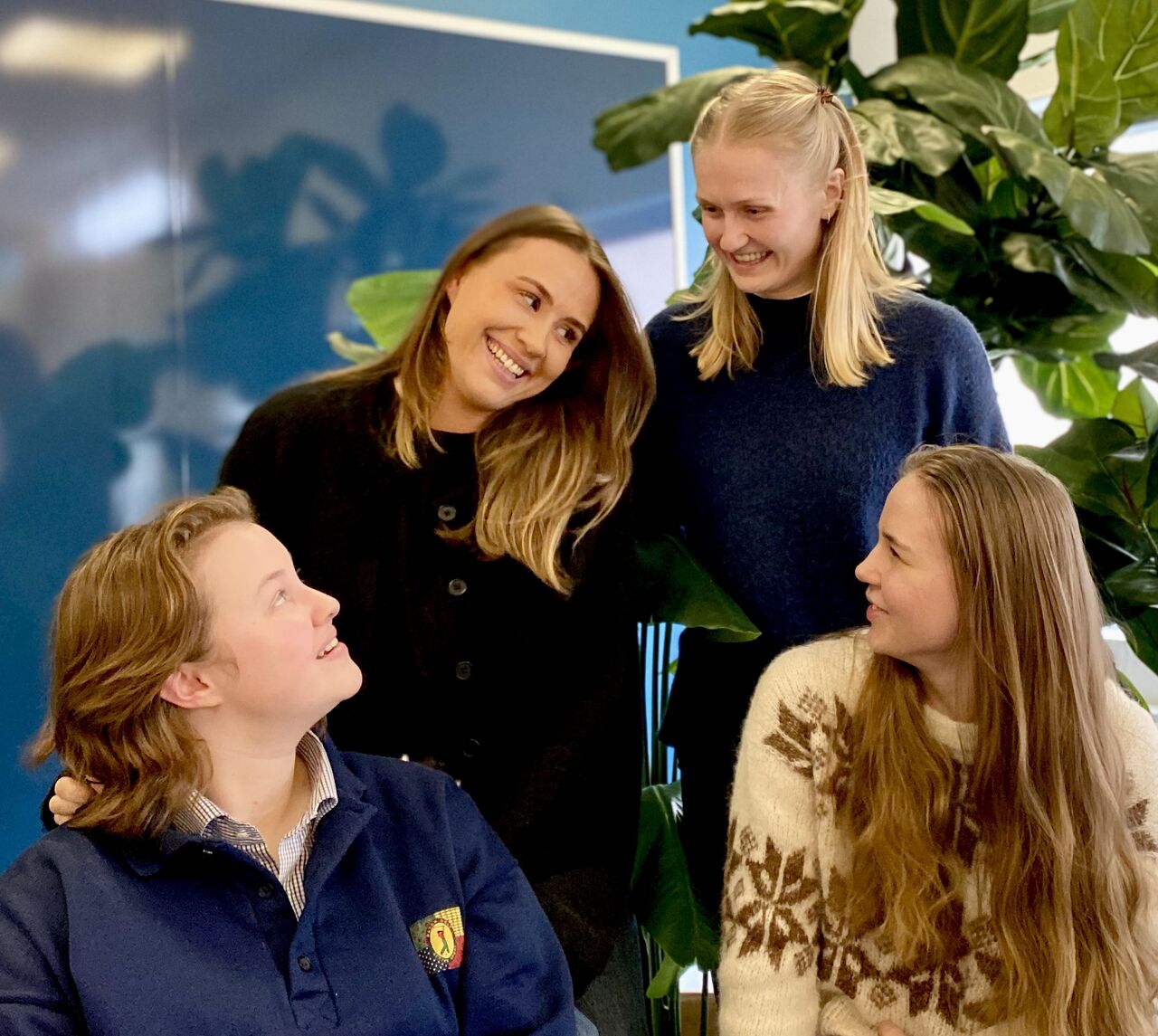
For those who teach or would like to teach in higher education across all disciplines
✅What will you learn in this course?
Think and act more like an entrepreneur
Inspire your students to develop entrepreneurial competence
Challenge your students to work in interaction with individuals and organizations outside the university
Courses 2026
Online course in English:
📆June 9th, 10th and 11th 09:00 – 15:00 all three days.
For NTNU/Nord University-employees: Free. A limited number of free seats for externals from other Norwegian institutions are made available through funding from Innovation Norway: First registered, first served!
📆May, 12th and 13th 2025. 09.00-16.00 both days. NTNU Campus Gløshaugen, Norway.
For NTNU/Nord University-employees: Free. A limited number of free seats for externals from other Norwegian institutions are made available through funding from Innovation Norway: First registered, first served!
How can we make more inclusive local communities? How can we make people change their habits to contribute to a greener society? How can we use artificial intelligence to make more efficient health care services, without losing human warmth and care? To resolve the grand challenges of our time, we need people from different disciplines to think and work together, both in the form of starting new ventures and by creating changes in organizations and communities.
An entrepreneur is a person who can spot opportunities, create solutions and gather the necessary resources to bring ideas to life, and thus, create value for others. In this course you will learn to think and act more like an entrepreneur – together with people from different disciplines – and you will learn how you can inspire your students to develop entrepreneurial competence so that they can become change agents in their respective contexts during and after their studies.
The course is offered both in Norwegian and English, both physically and online.
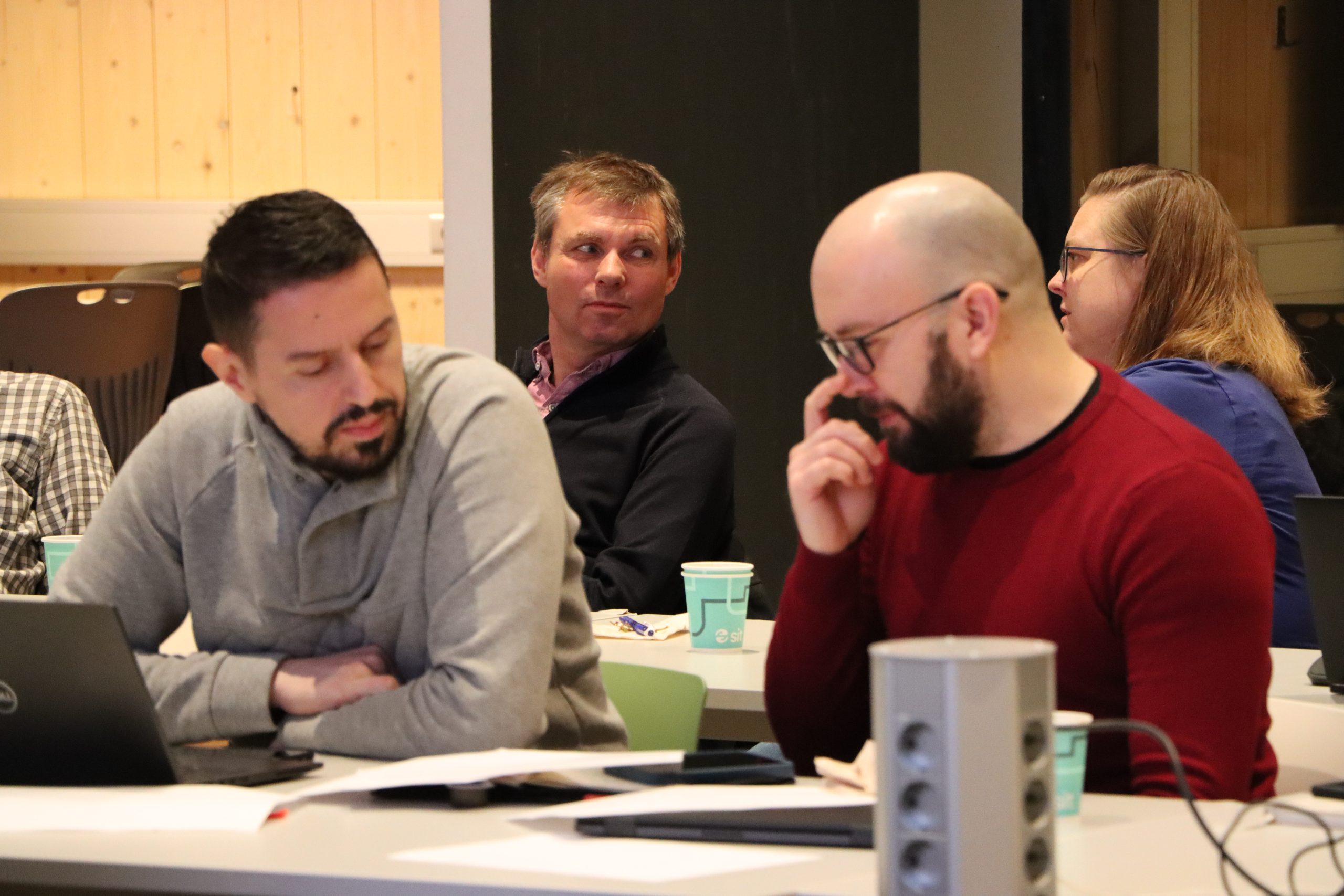
Entrepreneurship will be taught in a dynamic interplay between theoretical input, individual reflection, problem-solving and discussions in groups. In a friendly and supportive environment, you will train “pitching”-skills and give and receive feedback to other participant’s ideas and presentations. You will learn how to challenge your students to work in interaction with individuals and organizations outside the university. Upon completion of the course, you will have created a plan for how to integrate entrepreneurial aspects into your teaching.
We anchor our teaching in the I-CARE framework, revolving around the five pillars interact, challenge, act, reflect, and embrace (uncertainty). This educational framework, developed by Engage, leans on experiential learning pedagogy. In the online version of the course, we are extra aware of ensuring variation and give frequent breaks, to maximize engagement and learning.
Pre-requirements for all versions of the course: The participants are involved in teaching in higher education, and have submitted a preparatory work.
Pictures and video from the physical version of the course “Entrepreneurship education for better learning”:
The 3E 2026 Conference promises an unforgettable experience, blending cutting-edge research and educational insights with the breathtaking Arctic surroundings. Get ready for a conference like no other – where innovation meets the northern lights and conversations continue under the midnight sun.
Conference theme: Developing Change Agents through Entrepreneurship Education The urgent need to empower individuals with the skills and mindset to drive positive change for a better future makes entrepreneurship education more relevant than ever. Now is the time to advance the research within this field and delve deeper into its transformative potential. By exploring entrepreneurship education across levels, disciplines, industries, and contexts, we can deepen our understanding of how entrepreneurship education can develop change agents who drive positive social, economic, and environmental transformation. This year’s 3E Conference, set against the Arctic landscape of Bodø, highlights the importance of these questions in regions facing depopulation and environmental change – where entrepreneurship education can play a crucial role in building resilient communities and enabling students to shape their own futures.
Through an innovative and non-traditional format, the 3E Conference establishes a new paradigm for entrepreneurship conferences. It offers an inclusive setting to fully collaborate with researchers, educators and policymakers to debate and exchange the best practices, the major challenges and novel advances in entrepreneurship education with a special and unique focus on Europe. Unlike more traditional academic events, this conference puts the spotlight on problems and questions; the format is ‘unplugged’ without power point presentations. Instead, engaging round table discussions are held with participants who have read papers beforehand. Further, the keynote speakers are chosen from among the best submission of the participants.
Potential participants
Entrepreneurship education educators and researchers, research-based educators from primary, secondary, and higher institutions, practitioners involved in entrepreneurship support programs including trainers, policy makers and program managers, and special interest group representatives from local or international organisations.
Key dates
Submission Deadline for Abstracts: 1 December 2025 Notification of Acceptance: 31 January 2026 Submission Deadline for Final Contributions: 15 March 2026 Early-Bird Registration Deadline: 15 March 2026 Conference: 20-22 May 2026
Emnet Intraprenørskap i helsevesenet (IØ6602) er utviklet for deg som ønsker å skape endring fra innsiden av helsevesenet. Kurset gir deg verktøyene til å identifisere utfordringer i egen arbeidshverdag og utvikle løsninger med positiv effekt for pasienter, pårørende, kolleger og samfunnet. Jobber du i en etablert organisasjon som er relatert til helse – for eksempel i en kommunehelsetjeneste, i en sykehusavdeling, eller i en pasientorganisasjon? Da er dette emnet for deg!
Hva lærer du?
Gjennom dette forskningsbaserte emnet lærer du å:
forstå endringsarbeid i egen kontekst
anvende begreper og metoder innen intraprenørskap
utvikle og teste egne ideer
utforske din rolle og identitet som endringsagent
Undervisningen er hel-digital og fleksibel, tilpasset turnusarbeid og en travel klinisk hverdag. Du får tilgang til videoforelesninger, tekster og oppgaver for refleksjon og læring. Du blir utfordret til å benytte arbeidsplassen din aktivt i utviklingen av ny verdi. Og du får tilbud om veiledning – både digitalt og ved utvalgte studiesteder.
For hvem?
Emnet passer for ansatte i helsevesenet med relevant utdanning og arbeidserfaring. Det er særlig aktuelt for deg som jobber i primær- eller spesialisthelsetjenesten og ønsker å bidra til utvikling og forbedring av helsetjenestene.
Som Thea Eng Brenden, sykepleier og entreprenørskapsstudent, sier:
“Her får helsepersonell jobbe med problemer de kjenner fra egen arbeidsplass, og lære metoder for å løse dem. Det kan gi mye tilbake til avdelingen.”
Thea er tilknyttet emnet som studentassistent og har vært en aktiv bidragsyter i oppstarten av emnet.
Faglig ansvarlig
Emnet er utviklet og ledes av Gunn-Berit Neergård, seniorforsker ved SFU Engage. Med bakgrunn som sykepleier, teknologigründer og intraprenør, har hun erfart endringer i helsevesenet fra ulike hold, og hun har selv jobbet i flere år med å skape nye tjenester og produkter som kunne gagne kreftrammede. Hun har i over åtte år forsket på entreprenørskap blant helsepersonell, og sier at kunnskapen har resultert i dette emnet: – Alle mine år med forskning på dette temaet har vist at det mangler læringsmuligheter for erfarne klinikere, både i Norge og i utlandet.
Nå er altså kurset her, skreddersydd for klinikere med jobb i helsevesenet. Grip muligheten!
Praktisk informasjon
Studiepoeng: 7,5
Oppstart: 17.08.2026
Søknadsfrist: 31.05.2026
Undervisningsform: Hel-digital, med mulighet for desentralisert veiledning
Kursavgift: kr 15 000 kr
Opptakskrav: Bachelorgrad og tilknytning til helsetjenesten
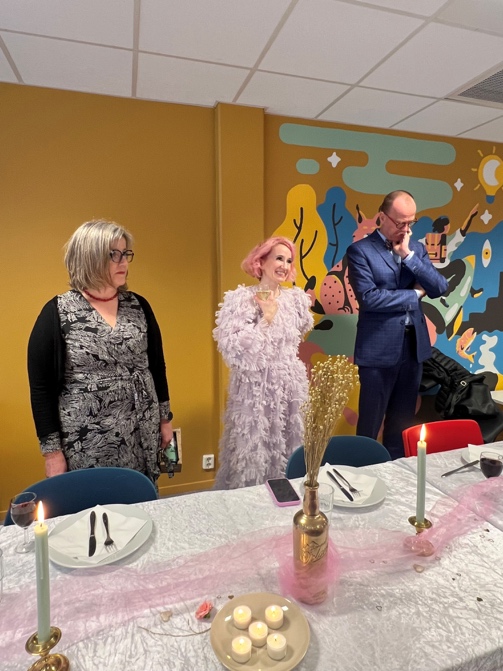
The days were celebrated with speeches, workshops, annual acid test presentations, inspirational talks, sofa chats, food and a banquet. Former students at NSE came from all over Norway to take part in the celebration and to get even more professional input from the innovation environment that grows and grows every year. During the celebration, many focus on the fact that ES is a start-up environment that builds on sharing, both ups and downs. Where those who are involved experience a kind of excessive cheering on each other.
Øystein Widding (left) and Roger Sørheim (right), professors at NTNU School of Entrepreneurship, celebrating the 20th anniversary.
Aksel Morris Bjørnø from class 18 was one of the former students who took part in the celebration. When asked about his experience with NSE, Bjørnø refers to Øystein Widding who said that NSE gives all students superpowers, which also comes with responsibility. This was something Bjørnø himself felt after he finished his master’s degree. He goes on to say that being constantly pushed outside your comfort zone does something to you that a typical course of study wouldn’t. Silje Uhlen Maurset from class 19 says that the commitment, interest, and ability to get something done that she had before was accelerated by NSE and taken to new heights.
Current students also speak highly of NSE. Thomas Klingenberg, class 24 and Herman Jørstad, class 25, describe NSE as a growth arena with many different people who are all welcome and allowed to be themselves. The two students believe that NSE will continue to build on the culture, which Jørstad describes as one of the most important reasons why he applied for the course.
Many new and old students were present to celebrate the anniversary.
The entrepreneurial ecosystem Trondheim has to offer is getting bigger and bigger. There is a culture of sharing that has spread from NSE to other parts of Trondheim, Trøndelag and nationally. NSE ‘s Alumni Association ESAF gets bigger and bigger with each class that starts. It helps to create, maintain, and stimulate contact between previously graduated students, current students, and the academic staff at NTNU’s School of Entrepreneurship. Maurset says that this network, that grows each yare, is important and gives the students something concrete they can reach for.
NSE is a program where students put in many hours, where mistakes are necessary to succeed and where only the most committed get through to the program. The current students Klingenberg and Jørstad are sure that the tough program will be worth it and give them tools they can use later in life. While Bjørnø and Maurset talk unanimously about the mindset as the most important thing they took with them after finishing the program. Maurset says it is not given that things will be done optimally and says you have to do things yourself. What can be done better and how can it be done? Bjørnø also adds that he has brought with him the drive and passion that he felt when he was in the community with the other students. He says he always does his best and then some.
Some of the former students talked about their way forward with startups after NSE.
Change agents are often talked about in connection with the budding entrepreneurs at NSE. For Maurset, this means not assuming others will solve things, but taking responsibility yourself. Even if it can be tough or you think it needs to be taken to another level. Bjørnø also agrees with this and further explains it is someone who stands on the front line and does what needs to be done. The students also agree with this definition but takes it a little further to what difference they want to make. Klingenberg describes a change agent as someone who gives a small impact on what the future will look like. Jørstad agrees and explains further that a change agent is someone who uses some of the time you have here on earth to push a small step forward. He says there are quite a few people here on earth, but that it is quite incredible how much difference we can make, just one of us if we have passion and do the job.
NSE already has many success stories with entrepreneurs who have taken their companies to new heights after the master’s degree. Klingenberg believes that NSE will be defined by several new success stories from the outside. But what makes students proceed in the entrepreneurial environment and also with their original idea? Maurset believes that in addition to the fact that these are people who thrive in the entrepreneurial environment, you are also pushed so hard to find the right idea and test it so thoroughly at the start. One must find reasons why it should fail and perfect the idea. Klingenberg also explains that some have already weeded out those who do not have enough motivation to do this, not to mention everything you learn at NSE that prepares you for startups and entrepreneurial life. Jørstad also ads that being thrown into it right away is important and that failing gives them experiences that they take with them further.
Two days of celebration are over and going forward it looks like NSE and the entrepreneurial community in Trondheim will develop even more and aim for 20 new years.
3E is an entrepreneurship education conference, and many participants from Engage contributed with presentations and workshops.
By William Husby Hoven
Each year, the 3E Conference – ECSB Entrepreneurship Education Conference is held. This year’s edition was hosted by Aarhus University and VIA University College, taking place in Aarhus, Denmark from 10-12 May. With an innovative and non-traditional format, the 3E Conference aims to establish a new paradigm for entrepreneurship conferences. It provides a distinct and engaging opportunity for researchers, educators, and policymakers to discuss and share their experiences regarding the significant challenges and advancements in enterprise education, with a special and unique focus on Europe. In 2023, the 3E Conference celebrated its 10-year anniversary and returned to the city of Aarhus.
Engagers’ exploring every aspect of the game.
The theme of this year’s conference was: “Back to the Future of Entrepreneurship Education,” and numerous Engagers’ were in attendance. Ingrid Oline Sivertsen, Dag H. Haneberg, Åshild Wilhelmsen, Sølvi Solvoll, and Ole Andreas Alsos were the minds behind the idea and development of the game that was tested during the workshop. The title of the article and workshop was: “How can we re-think assessment of students’ work in entrepreneurship education?”. The game itself draws significant influence from design and architecture education and serves as a tool for discussing and collaborating on innovative assessment methods in higher education courses. The game is called: “SUPER Assessor”.
Although there were many excellent workshops at 3E, this particular session stood out with its high level of engagement, laughter, competitive spirit, and satisfied participants who felt they gained a lot from their involvement. The games were in such high demand that they quickly disappeared, as entrepreneurship educators from Brazil, New Zealand, the Netherlands, England, and various other places around the world eagerly claimed their copies.
Regarding the game itself and the “Best PDW Award”, one of the developers stated: “We will continue to further develop this and hope to receive many valuable inputs. One team member has reached out to the TTO at NTNU. So far, we have received feedback from more than 60 educators across different disciplines and will be testing the game in the upcoming period during pedagogy courses at Nord University, an engineering conference at NTNU, and other contexts. After the summer, we hope to test it with many other instructors in Ireland.”
The game itself was developed through the “SUPER” project, where we focus on student-active learning and assessment methods. One of the game’s standout features is its “mission cards”, which offer participants a range of engaging agendas, including effective student assessment methods and cost-saving assessment strategies. This element sparks numerous fruitful discussions.
The “Best PDW Award”.
Congratulations on being awarded the prize: Ingrid, Dag Håkon, Ole Andreas, and Sølvi, well done!
Earlier in May, we invited students and educators to the seminar: “Student-driven ecosystems for innovation and entrepreneurship”. This was an academic seminar where we explored the question: “How can we best utilize ecosystems for student innovation in formal entrepreneurship education?” The day was filled with lectures, discussions, and group work.
By Pernille Svartveit Osmundsen
The event was a success involving great conversations, lots of inspiration and presentations of new opportunities for many outside NTNU. There were several who came from far distances to participate and get inspired so that they can take this experience with them to their own universities. One of them was Ingvild Åmås Høiby, working with the “Studentinkubator” (student incubator) at the University of Stavanger (UiS). Among several other things, their work involves providing students a safe environment to develop innovation and helping them connect with an innovation ecosystem. She goes into how an ecosystem is important for learning how others have done it, knowing what works, creating a network, and getting to know others who might become part of your team. In the context of an ecosystem, according to Høiby, it is important that it is safe and that you can get to know others who are interested in the same thing. This seminar has given her inspiration for how she can work with the ecosystem at UiS where they want to get more students involved.
Throughout the day, the participants were given several opportunities to share valuable insights with each other.
Marie Levin Matre, Joakim Marthinsen, and Manuel Alfaro are three students from Norges Idrettshøyskole (NIH) who are studying a bachelor’s degree in training, health, and performance. They came to the seminar because they have experienced, both during practice and bachelor’s work, that they could be useful for companies and have something to contribute. During their studies they have experienced that students feel a lack of clear connection to working life, and they want to do something about this. Alfaro says that it is a real problem that people don’t understand what they study and what they become. He further explains their vision, which is a student lab where companies can come up with products, applications, and everything within sports technology, and students can help solve real problems and help them develop their products.
The participants working together in groups.
When asked what they associated with the ecosystem, Alfaro said an ecosystem is a collaboration involving several parties. Ragnhild Nordeng Fauchald, who is a scholarship holder at NTNU in her third year and is researching in her doctorate how students learn from engaging in an innovation ecosystem, says the same thing, stating that it is a collaboration. More specifically, she describes this ecosystem as all the activity taking place both in specific activities, but also between actors within the ecosystem generating a form of commitment. She has heard that what this ecosystem is built on is clearer to the employees at NTNU and less clear to others. This is because what happens at other universities is less developed, and then there is less awareness of how one can work with other partners because the values one can provide across different players in the ecosystem are not as visible.
Fauchald further explains that it is equally important for the companies contributing money that they get something in return from the students. An ecosystem is continuous, just like in biology; the death of a species affects the entire ecosystem. It is vulnerable, being worked on and further developed at all times. This is something corresponding with the vision of the students from NIH. Matre talked about the benefits the student lab will generate for both students and companies. Students get work experience and the opportunity to get in contact with companies, while the companies become more familiar with the fields of study and what the students can provide them through the practise of real-life problem-solving.
Furthermore, the students talked about how this seminar has given them inspiration, motivation, and introduced them to a network. They have observed how others have succeeded and been shown how to start up and the process from an early idea to being placed into a system. Matre, Marthinsen, and Alfaro said that they are in the starting phase of the innovation environment NTNU has built up over several years, and therefore it was educational to hear from people who have succeeded and how they managed to do so.
Ken Singer, from the University of California, Berkeley, sharing his knowledge and insights with the audience.
Moreover, we were lucky enough to have Ken Singer with us at The Mine (Gruva), the Managing Director and Chief Learning Officer of the Sutardja Center for Entrepreneurship and Technology at the University of California, Berkeley. With his unique expertise and strong professional background in entrepreneurship and innovation, he shared some of his knowledge and insights on the topic: “Entrepreneurial Mindset and Culture: A Silicon Valley Perspective”. Additionally, he addressed the topic: “Shift Happens: Innovating in a Time of Crisis”, and held an interactive talk providing tips to students about how to be an entrepreneur in the US. We are very grateful for Ken’s motivating and inspiring lectures.
To address the question of how to utilize ecosystems for student innovation in formal entrepreneurship education, the seminar successfully connected students and educators from across Norway, fostering inspiration, networking, and knowledge-sharing, thereby facilitating mutual learning and contributing to the growth of the ecosystem.
Circular economy is about reusing the resources we have so that they run in an eternal cycle, and one of the goals is that it should be profitable to operate sustainably. “Circular economy is incredibly important in order to minimize all consumption and extraction of natural resources. Accordingly, that is important in order to ensure sustainable social development and a brighter future”, says the project manager of Start Sirkulær, Astrid Nitter.
The background to this event was Start NTNU’s yearly event called Start X, where you can apply as a project manager within any topic. One year ago, Astrid submitted the topic “circular economy” because she believed it was in the wind at the moment, and saw it as an extremely important topic to bring forward as we are currently in an area with a great need of innovation and new ideas. Obviously, she was not alone in having these thoughts and became project manager for Start Sirkulær. Engage was working on a similar event with Sara Grette and Anas Ani as project managers, who contacted Start NTNU and proposed a collaboration. The final result took place in the form of the event being launched back in February.
The students working together during the business simulator.
During Start Sirkulær 2023 the students got to participate in a 24-hour business simulator/case solution with mini-workshops and pitch courses. There were held two different pitching competitions where one was in connection with the business simulator, while the other was about ideas that could contribute to one or more of UN’s sustainability goals. At the evening there was arranged a quite successful “change-of-clothes-party”, and the whole event was concluded with a banquet at Britannia hotel. There the winners of the business simulator and the pitching competition were chosen, as well as being awarded prizes – including a trip to Germany, with TOMRA.
The students about to pitch their solutions in line with the problem presented by TOMRA.
The main problem TOMRA presented to this year’s case participants was: How can one create circularity in the textile industry, while at the same time being profitable? The participants had to familiarize themselves with a segment of the value chain in the textile industry. During the 24 hours the participants were given, they were able to participate in professional workshops with Trondheim Municipality, StartOff and Equinor, in addition to pitch courses with 6AM Accelerator.
Two of the participants were Mathias Bjønnes and Matias Ashour studying Electronic System Design and Innovations, joining the event because they thought it was exciting to learn more about entrepreneurship. Their experience was that it was challenging, but fun to work with, and as students who for the most part have theoretical courses it was a fun, new and challenging experience. They elaborated that they hadn’t thought about how difficult it was to recycle textiles and to what extent it is done. The two students added that the experience has made them become a little more observant about it, which can be said to be a small start on a journey towards a world operating from a circular economy point of view. “What makes me most satisfied and proud in retrospect is when I hear that the participants had fun while at the same time learning a lot about the circular economy, and specifically how big an impact the textile industry has on the climate and environment”, Astrid Nitter says.
The panel judging the solutions presented.
The goal from both the organizers and the main collaboration partner, TOMRA, was to reach out to all students from as many different fields of study as possible, at NTNU. “Different types of students can contribute to the topic from diverse points of view, backgrounds and angles” Nitter stated, and added “I am incredibly impressed by the solutions the participants were able to come up with in just 24 hours, and how good they were at pitching these solutions. The clothes-swap-night was also a nice addition to show how individuals can contribute to a circular textile industry. Last but not least, we think the banquet was very successful”.
To reach a brighter future Nitter talked about when explaining circular economy, we need to start thinking now. Everyone must do their part, and regarding the question of what is the most important thing that entrepreneurship and innovation can contribute to when it comes to developing this circular economy, Nitter responded: «To develop a circular economy, an incredible amount of innovation, new ideas and new start-ups are needed. Therefore, I hope Start Sirkulær has inspired students to continue investing in this field!”
On the 24th of January Engage hosted an event at The Mine regarding the annual “STUD-ENT” application process, in collaboration with Innovation Norway. Both students at NTNU who are to apply, and employees assisting students in the application process across different universities and colleges in Norway, were invited. During the daytime there was a workshop scheduled for the employees, while students from the NTNU School of Entrepreneurship were invited later on in the evening, given the opportunity to ask questions to Innovation Norway, learn more about the application process and to pitch their ideas. Our overall ambition was to host an event where employees from different universities and colleges could get together and exchange thoughts and experiences related to the “STUD-ENT” application process, as well as entrepreneurship in general.
A former receiver of the “STUD-ENT” grant, sharing tips from their application last year.
Granted by Innovation Norway
For the event we collaborated with Innovation Norway, a state-owned organization and the main contributor to sustainable development, assisting Norwegian start-ups with funds and expertise. Every year, students at universities or colleges involved in a start-up or with ambitions of developing a business idea, are given a chance to apply and receive up to a total of 1 million NOK grant from Innovation Norway. This is a great possibility for the recently established start-ups to further develop their idea. The students who are qualified to apply, must have an idea on how to solve a need or problem on the market today, and should involve the market acceptance in their application. Last year a total of 24 start-ups received 22,7 million NOK, and most of the applicants were from NTNU!
To kick off the event, a representant from Innovation Norway in Trondheim, Reidar Milan Hegle, presented the application and informed the employees about the process. Furthermore, he shared some advice regarding what the students should include in their applications. We had a chat with Reidar and asked him about what it takes to receive a grant, and to stand out from from the other applicants:
“It’s a holistic assessment, so it’s a bit difficult to point at one or two things. But you should be able to show that you have an idea or product with a great market potential, that there is value creation in Norway, that the team has a composition and a plan to ensure implementation, that the idea is innovative and that you add something new to the market. It must be a solid project and it must be what we believe in. We must believe in both the idea and in the people behind it.”
Reidar Milan Hegle, Innovation Norway
The primary focus of Innovation Norway is to invest in developing the future, where Hegle added: “They don’t apply for a grant, they apply for their future”. Both Engage and Innovation Norway especially focus on motivating students working within the fields of innovation and entrepreneurship, and the grants offered by Innovation Norway will be of great significance when the fresh students and start-ups are to realize their ideas on the market.
“We are in touch with many students and student communities, and we sense a lot of positivity. Many students who want to change the world, want to influence their own everyday life by achieving something good. We notice that it rubs off on us, and “STUD-ENT” is one of the happenings we look forward to every year”.
Reidar Milan Hegle, Innovation Norway
Representatives from different universities and colleges discussing and sharing experiences about their work with innovation.
An arena for exchange and inspiration
After the lunch break and some small talk, we held a workshop where the representatives discussed issues related to the application process. One of the topics up for discussion was how to influence and motivate the students to apply, in the best possible way. Engage tried to organize an arena where the employees could cooperate and discuss potential difficulties on the road, and be inspired through the exchange of different opinions and experiences. At the end we had a talk with some of the employees to hear what they had to say about the event:
“It’s fascinating to meet people from the community who are involved with student innovation in Norway, as it’s amazing how different all the organizations are. It is also exiting to see that those who are currently in an early phase at their institution, can obtain inspiration and knowledge guiding them in their further development. This exchange of information saves many organizations both time and resources off what we have spent a lot of time figuring out. It is very important that we have such an arena where we can exchange knowledge and learn from one another, both the good and the bad.”
Kristoffer Liland, Incubator Manager, UiA
In the evening, the students interested in applying for “STUD-ENT” from the NTNU School of Entrepreneurship, and students from different start-ups, came to The Mine to learn more about the application process and to pick up some tips from former applicants of the programme. In addition, the students also got the opportunity to pitch their amazing ideas!
Reidar Milan Hegle from Innovation Norway, providing the students with some advice about the application process.
The Norwegian University of Science and Technology (NTNU) awards its scholars with this honour for their clear and consistent focus on student learning in their teaching activities. Excellent teaching practitioners emphasise planning, implementing, assessing, and adapting their teaching practice in a way that best supports the students’ learning outcome. Excellent teaching practitioners have an inquiry-based approach to the development of their own teaching and programmes of study at NTNU. Pedagogical merit awards highlight the value of efforts to develop good teaching in higher education. Insight into the factors that improve students’ learning outcomes is important for work on the quality of education at NTNU. Teaching staff who work together and share valuable experience from their teaching are important in developing the programmes of study.
In November 2022, Engager Roger Sørheim was awarded this honour. We met him to talk about the significance of being honoured as an Excellent Teaching Practitioner.
Engage (E): Hi Roger, first of all: congratulations on being honoured as an Excellent Teaching Practitioner. Let me ask you this straightforwardly: Why did you get this award?
Roger Sørheim (RS): That is a good question; why did I get it? What was documented in the application was that I have been involved in a lot of activities that put the learner, so the student, into the focus. With activities that take the learner seriously, we continuously experiment, test, and try new things together. That is important for me: doing things together with the colleagues at the department and in later years at Engage and the NTNU School of Entrepreneurship. In general, the way of experimenting, actually testing out and then documenting the effect of what we are doing in entrepreneurship education, was highlighted in the decision to select me for this honour. This was an effort from more than one. It was a team effort to lift both the programme and later the Centre for Engaged Education through Entrepreneurship, Engage.
E: What role did Engage play on your journey to becoming an Excellent Teaching Practitioner?
RS: The backdrop is that we started the NTNU School of Entrepreneurship back in 2003. Back then, a venture creation programme like that was something very special and something that very few had heard about and tested. So it took some years until it got any recognition and traction. And then together with Øystein Widding, and later on other colleagues here at the department, we built quite a robust programme for entrepreneurship education. It became clear that elements of what we were doing at the School of Entrepreneurship could be adopted in other contexts and also further developed in other contexts. This goes into the direction of “entrepreneurship as a method”. We saw that this could be an opportunity for a centre of excellence in education (SFU).
E: What does it mean that you, a professor in entrepreneurship education, are the first in your department to be awarded this honour?
RS: Hopefully that we are doing something that is considered novel – and also something that works. It hopefully is a positive thing for the environment but also maybe an opportunity to spread the word to other departments, other professors, that could be inspired by what we are doing. And on the other hand, we could be inspired by what others are doing. Because we are becoming a part of a collegium that is determined to make good teaching and create good learning environments for the students. I think it is an opportunity for several more colleagues within Engage to apply and become honoured as an Excellent Teaching Practitioner.
E: What are the implications of this award? How does this award influence your next steps?
RS: Together with all the activities we are doing, we put entrepreneurship education even more on the agenda. But this is just one of the beneficial impacts of the honour. The award also confirms that our approach is a valid path to follow; maybe the award could be a little bit of help in creating legitimacy and bringing our vision into other environments, other departments, other faculties. But in general, I don’t think that this award itself revolutionizes anything. It is a confirmation that what we are doing is recognised as something useful.
E: Do you have any closing remarks?
RS: The most important take away: the teamwork made it happen.
The 24-28 October, 8 different student companies popped up in the common area of Nord University of Bodø. Anyone passing had the chance to purchase reflex totebags, winter kits, T-shirts, caps, bracelets, and iced coffee. The pop-up store founders were students of the new course Entrepreneurship and Value Creation, developed by Sølvi Solvoll, Trine Åsheim Bernhardsen and Ingrid Berg Sivertsen.
By Lene Øy
High spirits among the students participating, here pictured in front of their pop-up stores.
In the course Entrepreneurship and Value Creation at Nord University in Bodø, students get a practical approach to university studies. As part of the course the students have been working in groups to create student companies.
Madeleine Lillegård, one of the students, says: “It has been of great value to be part of this experience, because I want to start my own company one day. This gave us the opportunity to learn more about how things work, for example registration in Brønnøysundregisteret. It was much more exciting than just being told theoretically how to do things.”
Collaboration with Ungt Entreprenørskap
This event has been a collaboration with Ungt Entreprenørskap Nordland (Young Entrepreneurship) who work to increase creativity, creative joy and confidence among youth.
Hedda Eldøen, CEO of Ungt Entreprenørskap, says: “It’s fantastic to see the students on stand today. They have developed ideas in such short time, and are now here with finished products that they can sell. Three weeks ago, when we last met them, they were still in the idea development phase. It is also impressive to see how they use their own network during the product development phase.”
Hedda Eldøen and Nora Kristensen from Ungt Entreprenørskap were pleased with the result of the project.
Nora Kristensen, adviser at Ungt Entreprenørskap Nordland, says that: “It is very good to see that the students are acquiring entrepreneurial skills through these student companies. Ungt Entreprenørskap and many others believe that these are very important skills that students need, regardless of whether they choose to start something themselves or are employed in an existing company. We hear from the students that they have encountered challenges during the process and that they have had to be creative to come up with new solutions.”
The course Entrepreneurship and Value Creation
Sølvi Solvoll has, together with Trine Åsheim Bernhardsen and Ingrid Berg Sivertsen, developed the course Entrepreneurship and Value Creation. Trine is a PhD candidate, and will study the teams as part of her research. The student feedback was unite: This was a challenging, but fun learning experience.
The course, which connects theory and practice includes in total 39 students from Bachelor in Business Administration, International Marketing and 9 international students on exchange. The course is divided in two parts. Initially, the students get an introduction to the theory behind entrepreneurship, with a lot of activities and games as learning strategies. Secondly, they are divided into teams with a challenge to come up with a business idea that they would test as a student company. “Today, we can see all the 8 groups being here and they have solved their task exceptionally. To see them getting their first sales done is a big victory, and makes me very proud on behalf of the students”, a touched Sølvi says. “This was a great way to integrate international and Norwegian students”, Trine says – also clearly proud of the achievements of the students.
Sølvi Solvoll (in the middle) with Lars Morten Lundbakk (left) from DNB and Ulrikke Kristensen (right) from DNB.
“The different workshops and tasks through this semester have trained the students on idea generation, constructing a concept, presentation, marketing, and economics. This has been useful knowledge during these last weeks of completing their projects.”
Ingrid Berg Sivertsen, Project Manager at Engage, Nord University
Sølvi also points out that this is a new course, with many new elements to be tested. They have faced many challenges, but these challenges give them experience to further develop the course. This is also the main reason making a student company is a mandatory activity. To give the students the experience they need to establish their own companies one day. “We hope and believe that the students now are better equipped to see new business ideas and create new values.”
Artic Ignite is a yearly accelerator program located in Tromsø, Norway. The event is held under the aegis of Norinnova, in collaboration with the Norwegian Ministry of Foreign Affairs. Every year ten lucky start-ups are selected to take part in the program, where each participating start-up receives NOK 100.000 in starting capital for the development of their business idea. At the end of the program three start-ups receive development grants of half a million NOK each, based on the companies’ pitches on stage. In addition, the participating start-ups can be awarded the “People’s Prize”, consisting of another NOK 500.000.
Nowadays, raising capital might be difficult for young entrepreneurs with a business idea in Northern Norway, a challenge Arctic Ignite tries to address. Their mission is to facilitate for more start-ups being able to develop their business ideas in Northern Norway, reaching out to young, talented entrepreneurs based in the region. As part of the accelerator programme, the carefully selected participants are given an opportunity to attend two different gatherings, encountering a panel of experts fully focused on their ideas. Furthermore, they get access to relevant networks and are given an opportunity to present their ideas in front of a jury during the final event.
Hermann Schips, Christoffer Joys Røang, Ole Jørgen Thue Holthe and Johan Ludvig Holst at Arctic Ignite, Tromsø.
Kelpinor
Kelpinor is a marine technology start-up originating from NTNU, focusing on kelp farming for the future. They have developed a cultivation technology that reduces costs of kelp production by up to 40%, in comparison with current methods. The company has ambitions to grow 10,000 tonnes of kelp by 2027, which is 10 times the current total production in Norway. On their journey towards achieving this goal the company starts production of kelp in January 2023, after Kelpinor’s first production plant is launched in the sea outside of Sandhornøy in Gildeskål in November this year. This plant has the size of 8 football pitches, and 10 tonnes of kelp will be harvested during the summer of 2023. The funds from Arctic Ignite will play a very important role in enabling them to achieve their goals in the years to come.
The Kelpinor team in Tromsø after the award ceremony at Arctic Ignite.
The jury was greatly impressed by Kelpinors’ pitch on stage, and awarded them the “Jury’s Innovation Prize” of half a million NOK. And as if that wasn’t enough, they managed to win the “People’s Prize” as well – a prize consisting of another half a million NOK, decided exclusively by the public. We would like to express our deepest congratulations to Kelpinor, and cannot wait to follow their journey in the time to come!
Every year the Norwegian Government, through the Norwegian Research Council (NRC), hand out grants of 1 million NOK each. The benefitting parties are start-ups run by graduating students who have achieved progress and need more funding to take their projects to the next level. This year there were 42 applicants, and 20 million NOK was granted to 20 teams of hopefuls. Close to half were students at NTNU.
– More of the entrepreneurial mentality will help Norway through the restructuring we know we are going through. STUD-ENT is strengthening the entrepreneurship culture at the universities and colleges. The climate crisis and the corona crisis actualizes this more than ever. I think it is inspiring and exciting to see the next generation think big, Minister of Industry Iselin Nybø said in a press release.
Important
NRC contributes to helping startups in critical phases of their conception. When students graduate from NTNU or other universities and colleges, the students are effectively full-time employees in their start-ups and more often than not without a steady income. For entrepreneurs in this position, it is therefore essential to have funding to pay expenses and invest where it is necessary to create a sustainable business.
Together with other grants like NTNU Discovery and grants from Innovation Norway, the grant system in Norway covers many aspects that are important for today’s startups. Technology development, payroll, strategizing, marketing, and testing are all things that our hopefuls must consider. Some grants, like NTNU Discovery, focus primarily on technology development, and in order to cover other sides of what makes a business go around, soft funding from different sources is essential for today’s student driven start-ups.
– STUD-ENT enables students with the most promising ideas to continue working with their venture full time after graduation. Starting a new company involves a lot of risks and it is difficult to get financial support in this early phase. STUD-ENT gives the students some more time to work with their venture and increases the probability of creating a successful venture. I am thrilled that so many of our being able to get this support. I think the main reason that many of our students get Stud-ent is hard work and the unique sharing culture at NSE. Previous students at NSE that have received STUD-ENT help and push today’s student. This enables knowledge sharing and creates a culture that foster success, NSE lecturer Even Haug Larsen could tell Engage.
Engage plays a key part in the ecosystem
Engage partners NTNU School of Entrepreneurship (NSE) and Spark* NTNU are sure to be very proud of their achievements this last year. Eight of the nine start-ups that are connected to NTNU are current and former users of Spark* NTNUs services.
NSE is usually well represented and this year 7 out of the 20 million ended up with the school. As Larsen stated, the reason for this could be the unique culture at NSE and the hard work the students put into their ventures. 5th-year students Marcus Nickelsen and Vidar Melstveit, together with 4th-year student Henning Seeberg, are the minds behind Njord Robotics. Together they are creating the world’s first autonomous washing robots for use in land-based fish farming.
Henning, Marcus and Vidar
– We are of course very happy to receive the grant from the Norwegian Research Council. The funding will ensure our operations and our progress for the next year and help us with the next step to commercialize. We want to use the money on development and prototyping and some of it will also go to salaries and office spaces, COO Marcus Nickelsen said to Engage.
Start-ups receiving funding from Forskningsrådet
Rubato Booking – Digital booking platform connecting artists and music event organizers (NSE)
SlideDrain AS – Innovative drains for an easy, quick and safe installation (NSE)
Ocean Access – Autonomous communication system for remote offshore monitoring (NSE)
Metaito AS – Factsplat: A customizable intranet for effective navigation of digital tools and services
WAID: Rapid preparedness and delegate sharing in humanitarian aid organisations (NSE)
Snowroller AS – Commercialization of a complete circular business model (CCBM) for the fashion industry (NSE)
Njord Robotics: Autonomous Cleaning Drones for Land-based Fish Farming (NSE)
Ntention AS – Modular gesture recognition system for customizable Human Computer Interaction (HCI) in AR/VR applications (NSE)
This initiative has been driven by the strong vision of Spark* NTNU leader, Siri Mostad Larsen, whose commitment has been crucial in making this expansion a reality. The initiative has been developed in close collaboration with Engage, which has played a central role in enabling and supporting the establishment in Ålesund.
Spark* NTNU leader Siri Mostad Larsen, together with SFU Engage staff member Elise Hamnes Høvik.
As part of this initiative, we have established a dedicated local team consisting of four full-time students. The team includes a local head of Spark* Ålesund, two advisors who will support and mentor students working on business ideas, and a local lead for Boost Henne Ålesund, reinforcing our commitment to supporting women entrepreneurs and building an inclusive innovation environment.
By bringing Spark* to Ålesund, we aim to lower the threshold for developing ideas, support early-stage projects, and empower even more students across campuses to explore the potential of their work.
We believe Spark* Ålesund will play a key role in strengthening the innovation ecosystem in Ålesund and the Sunnmøre region. By connecting talent, ideas, and resources, and through continued collaboration with Engage and other key stakeholders, we aim to foster stronger collaboration between academia, industry, and society.
We are excited to follow the journey ahead for the team in Ålesund!
This advanced course is designed for educators who want to apply entrepreneurship directly in their teaching. You’ll explore research-based approaches, test them in your own practice, and get valuable feedback from peers and experts. .
✅ What you’ll gain
Practical tools for designing entrepreneurial learning activities
A deeper understanding of entrepreneurship in education
Peer and expert feedback
Inspiration from other educators across disciplines
A supportive community of practice
🗓️ Course format
Two online sessions: • June 15, 09:00–13:30 • November 3, 09:00–13:30
Between sessions: Individual work and peer-reviewed assignment
Workload: 20 hours
Platform: Zoom (link will be sent before the course)
Language: English
🎯 Who can join?
Academic staff in higher education who have completed the basic course Entrepreneurship Education for Better Learning or can document equivalent experience.
📌 Practical info
Free of charge for employees at NTNU/Nord University. Course fee (8000 NOK) for external participants. A limited number of free seats for externals from other Norwegian institutions are made available through funding from Innovation Norway: First registered, first served!
For participants outside Norway, contact havard.engen@ntnu.no for registration and payment options.
Offered at NTNU, Trondheim this Spring, this intensive three-day course will give you an introduction to the mindset, tools, and practical experience needed to navigate innovation within an academic context. You will learn how opportunities arise from research, how to evaluate their relevance for users and society, and how to take action to realize them.
Grounded in the internationally recognized entrepreneurship education framework developed at Engage – Centre for Engaged Education through Entrepreneurship, the course blends lectures, workshops, group discussions, and real-world practice. You will work with your own research (or that of peers) to develop and assess a concrete innovation idea. Along the way, you’ll interact with experts from NTNU’s Innovation Ecosystem, including the Technology Transfer Office, gaining valuable insights into how universities create impact beyond academia.
By the end of the course, you will:
Understand key concepts in research-based innovation and entrepreneurial behavior
Be able to identify and evaluate the innovation potential of research outcomes
Communicate the value of your ideas to diverse audiences
Reflect on your own role, motivation, and leadership capacity in innovation processes
This course is ideal for PhD candidates seeking to strengthen their innovation competence, meet requirements of the Norwegian National Qualifications Framework, and prepare for careers both inside and outside academia.
Admission requirement:
Enrollment in a (Norwegian) PhD programme. Researchers from non-Norwegian institutions are welcome to apply and will be accommodated subject to available capacity.
Physical attendance is mandatory due to the course’s interactive, practice‑based design.
Dates: April 27 and 28 and June 8, 2026
Course fee: The normal course fee of NOK 5,000 is exempt this year due to financial contribution from NTNU and Innovation Norway’s national ecosystem funds.
Take the next step toward making your research matter — not just in theory, but in practice. Join us and develop the skills, confidence, and mindset to become an innovator within your field.
On stage, the audience met a number of engaged students and entrepreneurs under the age of 30, joined by young politicians and business leaders in an energetic and honest conversation about responsibility, solutions, and hope for the future.
A clear start
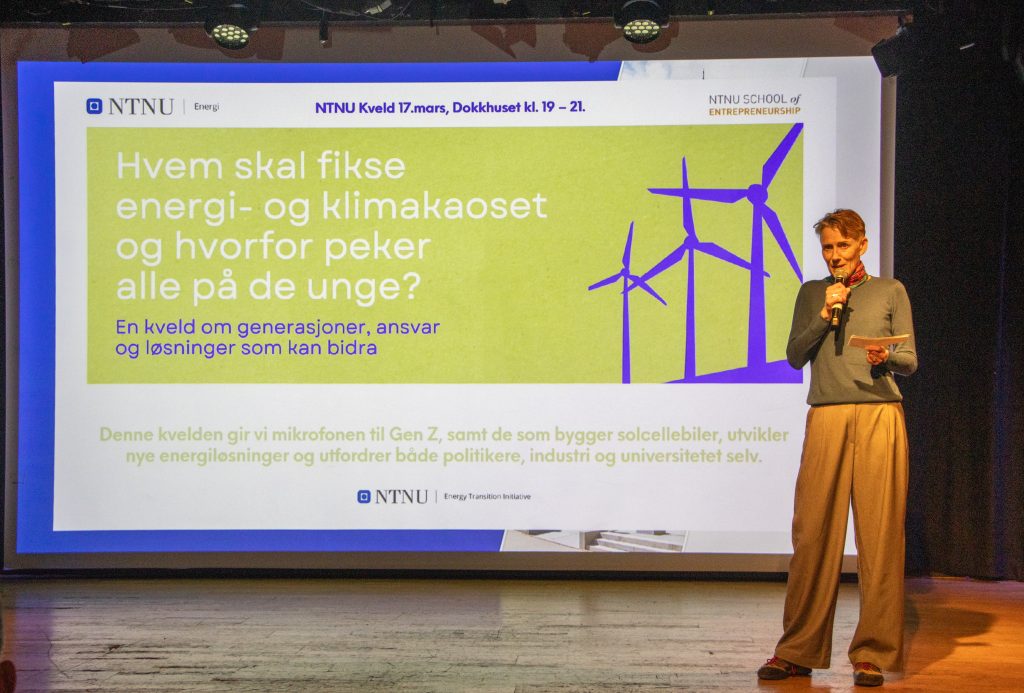
The evening was kicked off by Anne Lise Aakervik, Head of Communications for the NTNU Energy strategic area. She set the tone with a powerful message:
“Welcome to an evening of insight from NTNU. Tonight we will meet students who engage in the climate and energy transition in various ways – and we will discuss the generational perspective. Looming over us are the climate crisis, energy challenges, biodiversity loss, and wars that affect societies and the climate. World leaders behave as if this is a game. The grown-ups are leaving the table. And when even politicians fail to step up, perhaps it’s no wonder that we point to the young?”
Anne Lise Aakervik opened the program.
An evening led by NTNU entrepreneurs
Associate Professor Ingrid Berg Sivertsen and student entrepreneur Kristian Romen guided the audience through the program and two panel debates, ensuring smooth transitions between the contributions.
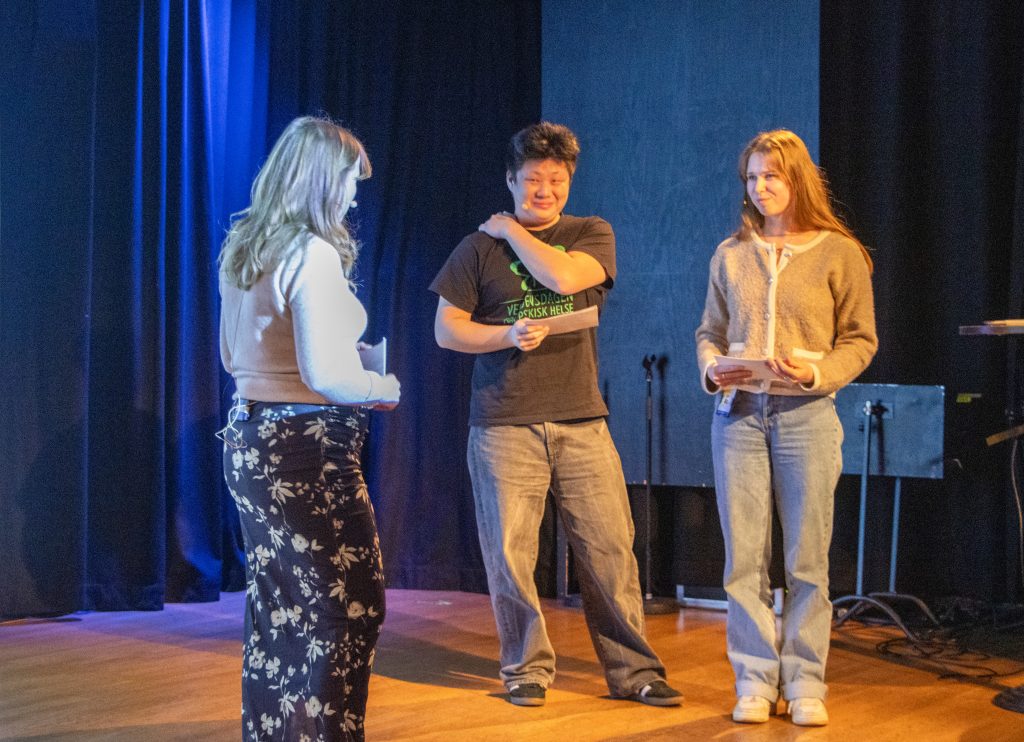
Ingrid asks Yuhan and Aleksandra from UNGredaksjonen some follow-up questions.
Student initiatives at the forefront
Several student-driven initiatives presented their work throughout the evening:
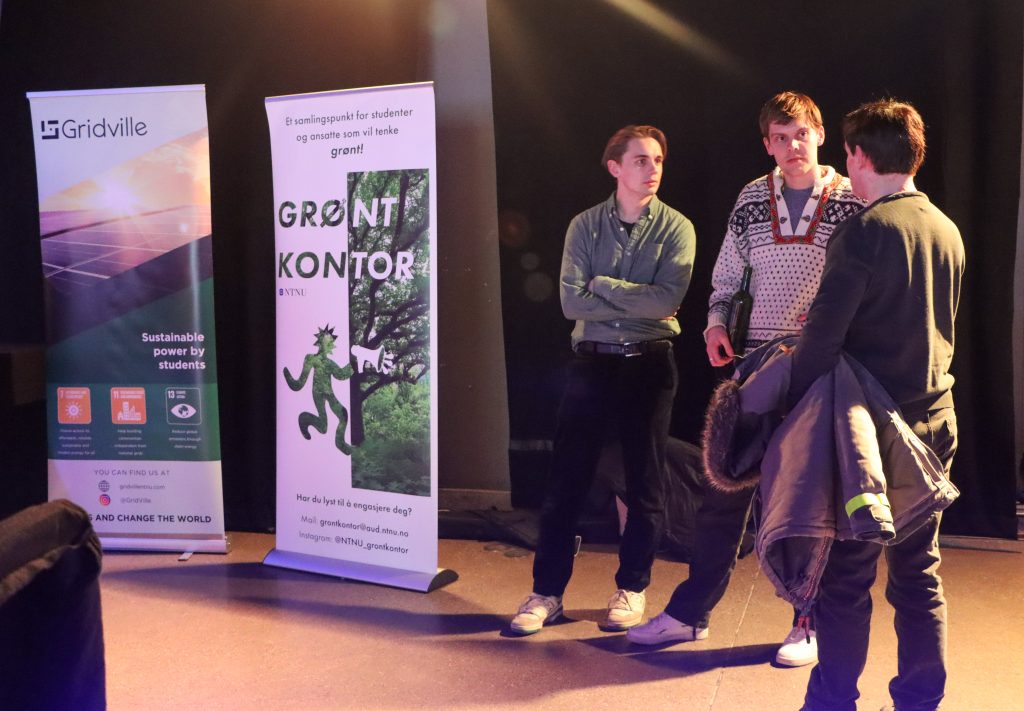
UNGredaksjonen and Grøntkontoret shared insights from their engagement and what they learn through hands-on climate work at NTNU.
GridVille and Nordlys presented their technical projects within energy and green innovation.
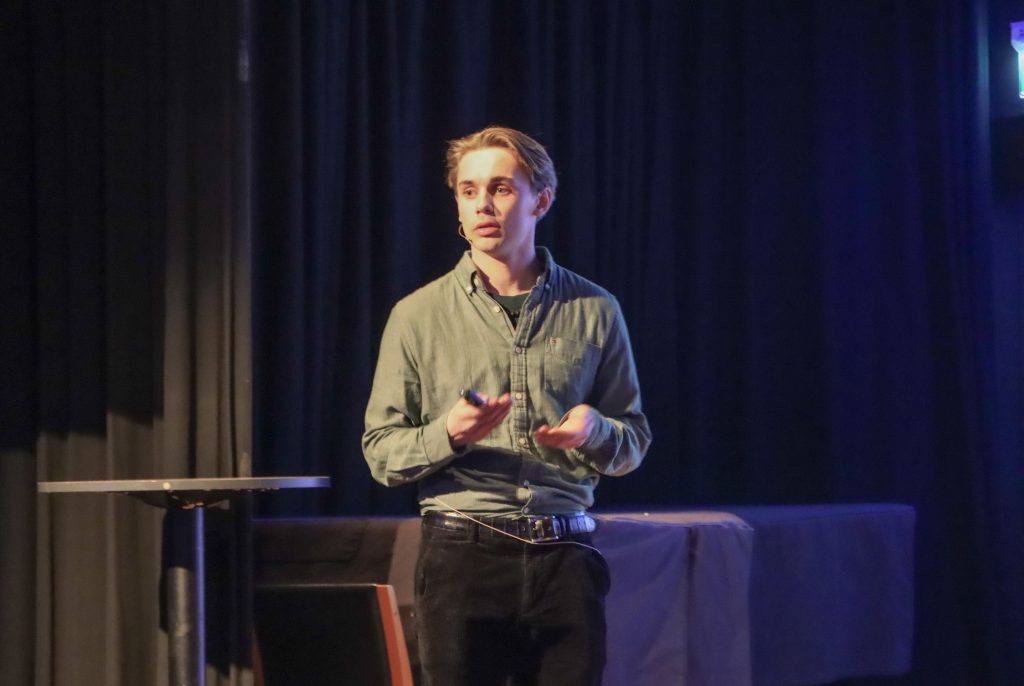
Rasmus Nummelin from Nordlys presented the work on the organization’s first car and their progress since their founding in 2023.
Erik Shini from GridVille described the long process behind their energy project, which is now nearing a finished prototype. They plan testing in Norway before working toward their ultimate goal: installation in Nepal.
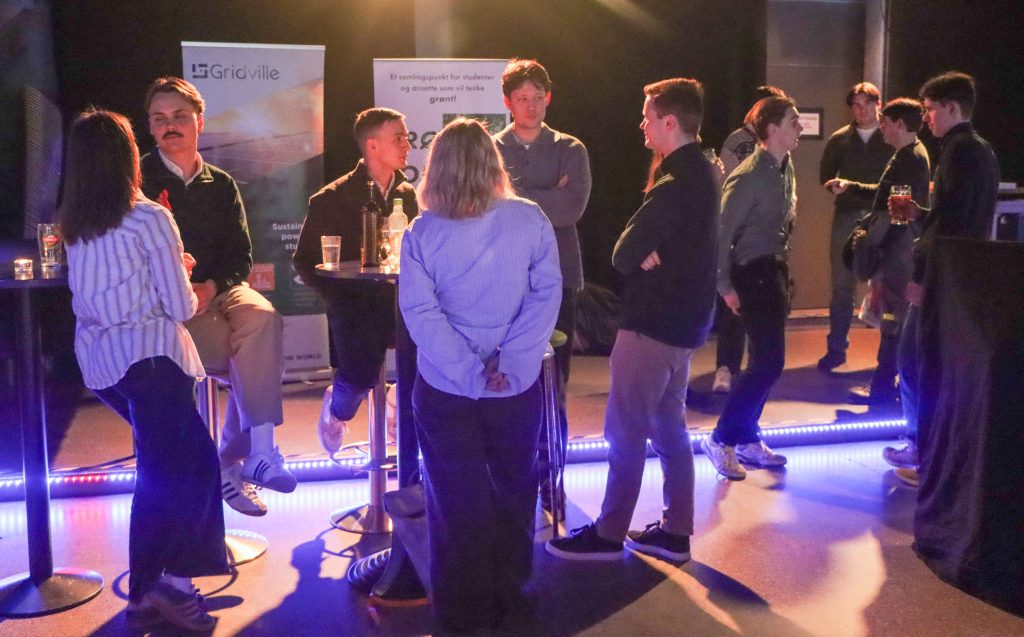
The audience was clearly impressed by all of the projects presented.
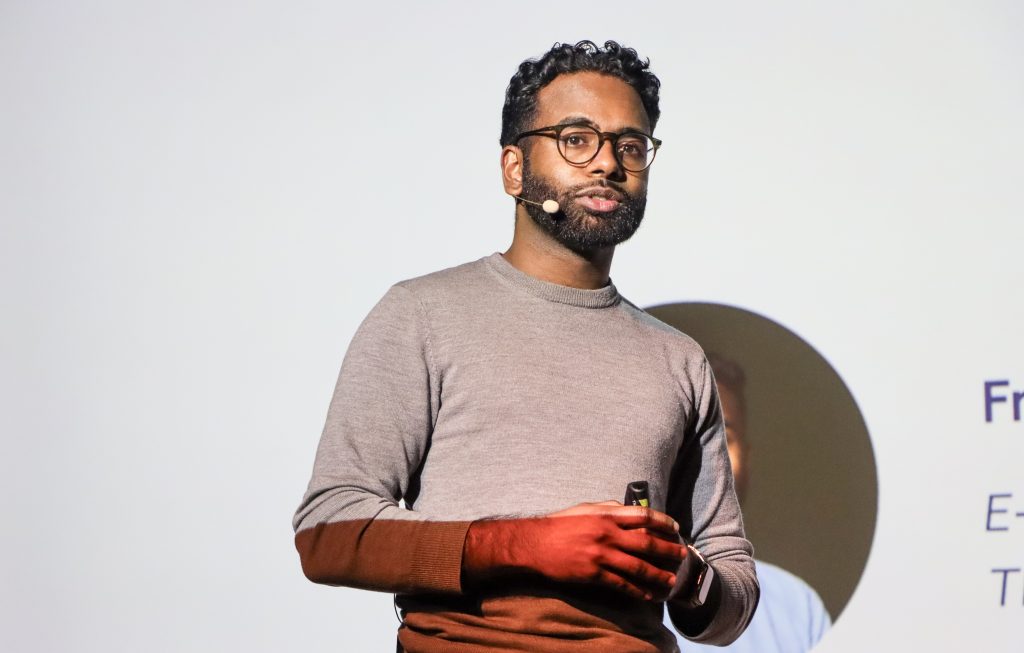
Francin from the startup enmo talked about product testing around Trøndelag.
Startups and commercial perspectives
The audience also gained insight into how the energy transition is driven forward through entrepreneurship and new business models. Befara, presented by former School of Entrepreneurship student Julie Vikki, and enmo, represented by Product Manager and current entrepreneurship student Francin Vincent, demonstrated how technology and sustainability can be combined in practical and scalable solutions.
Research providing a broader outlook
The evening also included a research perspective. Postdoctoral fellow Fanny Hermundsdottir (Department of Industrial Economics and Technology Management) delivered a brief and clear talk showing that Norwegian companies are in fact equipped for sustainable transformation – and that research confirms: green transformation can provide long-term competitive advantages. An inspiring contribution that added academic depth between the two panel debates.
Fanny presented her research findings in her talk.
Engaged panels and clear generational dialogue
The panel participants were:
Ståle Gjersvold (TrønderEnergi)
Trygve G. Larsen (Thamsklyngen)
Hedda Reinskou (Høyre)
Hans Kristian Solbu (Besteforeldrenes klimaaksjon)
Aleksander Torsteinbø (Grønne Studenter, MDG)
Martin Joachim Jensen (NTNU Grønt kontor)
The discussions were characterized by a clear generational dialogue and an engaged audience. Many young people were present, and both the willingness to take responsibility – and the expectation of action – were palpable.
Shared responsibility and pragmatic optimism
Toward the end of the evening, there was clear agreement that solving the climate and energy challenges requires effort from all generations. At the same time, a number of concrete initiatives were showcased – from students, researchers, businesses, and startups.
The evening painted a clear picture that a sustainable transition is not only necessary – but also possible, profitable, and already well underway.
Vil du bruke din fagkunnskap og ditt engasjement til å løse virkelige samfunnsutfordringer – lokalt, regionalt og globalt? Høsten 2026 lanserer Nord universitet kurset Sosial innovasjon i praksis for studenter, forskere og faglige ansatte som vil skape reell verdi i samfunnet.
Du trenger ikke erfaring med innovasjon eller ha en idé klar – nysgjerrighet og engasjement er det viktigste.
Hva kan du gjøre i kurset?
Du kan:
Videreutvikle egen idé
Jobbe med reelle caser fra kommuner, organisasjoner, bedrifter og andre samfunnsaktører
Alle deltakere møter sosiale entreprenører og andre aktører, og får nettverk og innsikt i hvordan fagkunnskapen din skaper verdi utenfor klasserommet.
Program og læring
Kurset består av 6 samlinger (sept.–nov.) på Spir – Nord universitets idélab, et kreativt rom for eksperimentering og samskaping. Samlingene inkluderer foredrag, metoder, verktøy, idéutvikling og refleksjon.
Du utvikler kompetanse som etterspørres i både offentlig sektor, akademia og næringsliv:
The purpose of the map is to build an understandable and informative guide for complex ecosystems. We aim to provide a clear, interactive guide that highlights the resources available to students, researchers, and innovators in Bodø.
The beta version of the map for Bodø is published below.
Actors
An overview of actors is visible on the left side of the map. These are grouped into three broad categories:
Organizations: Student clubs, departments, or external actors contributing to the innovation ecosystem.
Spaces: Locations/venues that support innovation, events, collaboration, prototyping, product development and/or business development.
Faculties: Faculties at the university.
Offerings
On the right side of the map, there are separate tabs for funding opportunities and events:
Funding: List of funding opportunities.
Events: Overview of events in the ecosystem.
Feedback and comments
This is an ongoing project, and we welcome your input, suggestions and comments.
If you have questions about the project or wish to explore creating a map for your university or innovation ecosystem, please reach out.
In addition to Bodø, we are also mapping the innovation ecosystem at NTNU (Trondheim), which you can explore here.
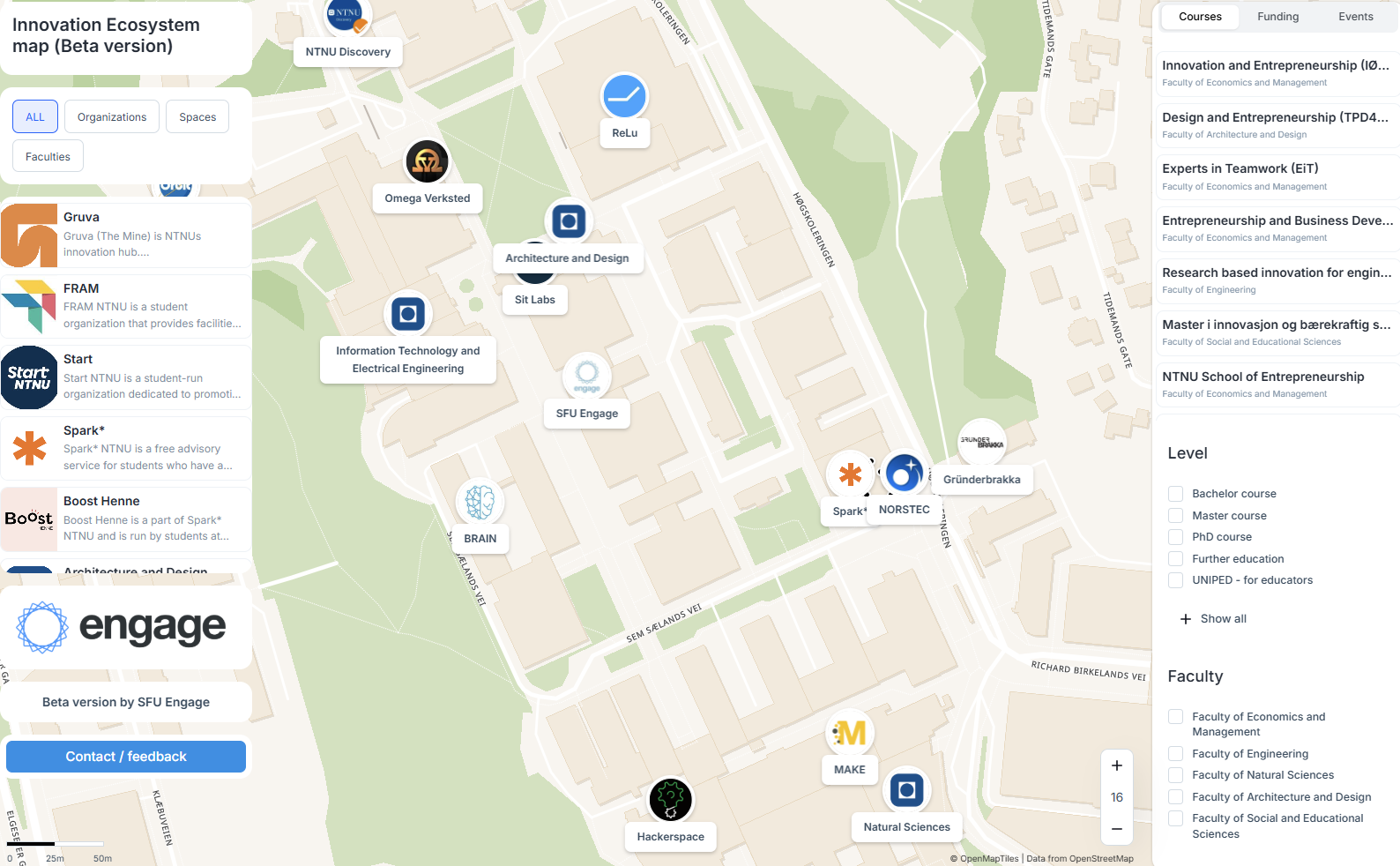
The purpose of the map is to build an understandable and informative guide for complex ecosystems. We aim to provide a clear, interactive guide that highlights the resources available to students, researchers, and innovators in Trondheim.
The beta version of the map for Trondheim is published below.
Actors
An overview of actors is visible on the left side of the map. These are grouped into three broad categories:
Organizations: Student clubs, departments, or external actors contributing to the innovation ecosystem.
Spaces: Locations/venues that support innovation, events, collaboration, prototyping, product development and/or business development.
Faculties: Faculties at the university.
Offerings
On the right side of the map, there are separate tabs for courses, funding opportunities and events:
Courses: Includes academic programs, courses and modules that include innovation, entrepreneurship, or project-based learning.
Funding: List of funding opportunities.
Events: Overview of events in the ecosystem, in chronological order.
Feedback and comments
This is an ongoing project, and we welcome your input, suggestions and comments through the buttons on the map (Contact / feedback, Register event and Register funding opportunity).
In addition to Trondheim, we are also mapping the innovation ecosystem at Nord University (Bodø), which you can explore here🔗.
If you have questions about the project or wish to explore creating a map for your university or innovation ecosystem, please reach out🔗.
Haukland’s thesis not only marked the end of her doctorate, it also marked the end of her long and challenging journey through education. In 2019, Haukland was diagnosed with ADHD. The diagnosis gave her an explanation for why she always struggled with paying attention and why she always postponed everything until the last minute. During lectures and other less enjoyable activities, she could even fall asleep. Her friends often told Haukland that she had ADHD, but she never believed them — until she hit a breaking point.
During a one-to-one meeting with her thesis supervisor, she unexpectedly fell asleep.
Nobody cares if I don’t attend every lecture, but during a meeting with my supervisor I fell asleep. That’s when I thought something was very wrong. First I thought that I had narcolepsy or a brain tumour, but then three doctors suggested that I had ADHD.
Cecilie Haukland SFU Engage Nord University
Photo here and above: Grete Ingemann Knudsen / Nord University
ADHD and education
Haukland is, like many individuals with ADHD, extremely creative and capable of hyperfocus when a task is engaging enough. At the same time, she has struggled with her education — especially with choosing her academic path. Her time as a student includes studies in both nursing and economics. In total, she has accumulated 605 study points.
Many individuals with ADHD struggle with education. Numbers from ADHD Norge indicate that around 40% of students who have a high risk of dropping out have either autism or ADHD. Because of these challenges, it can be difficult to find a place within conventional career paths. Therefore, some individuals with ADHD turn to entrepreneurship instead. According to Haukland, research shows that individuals with ADHD can become excellent entrepreneurs.
A lot of people with ADHD is very creative, and they have an ability to generate lots of ideas in a short span of time. In addition, a lot of people with ADHD struggle with school, therefore they may not have any other choices than becoming entrepreneurs.
Cecilie Haukland SFU Engage Nord University
The ADHD Brain
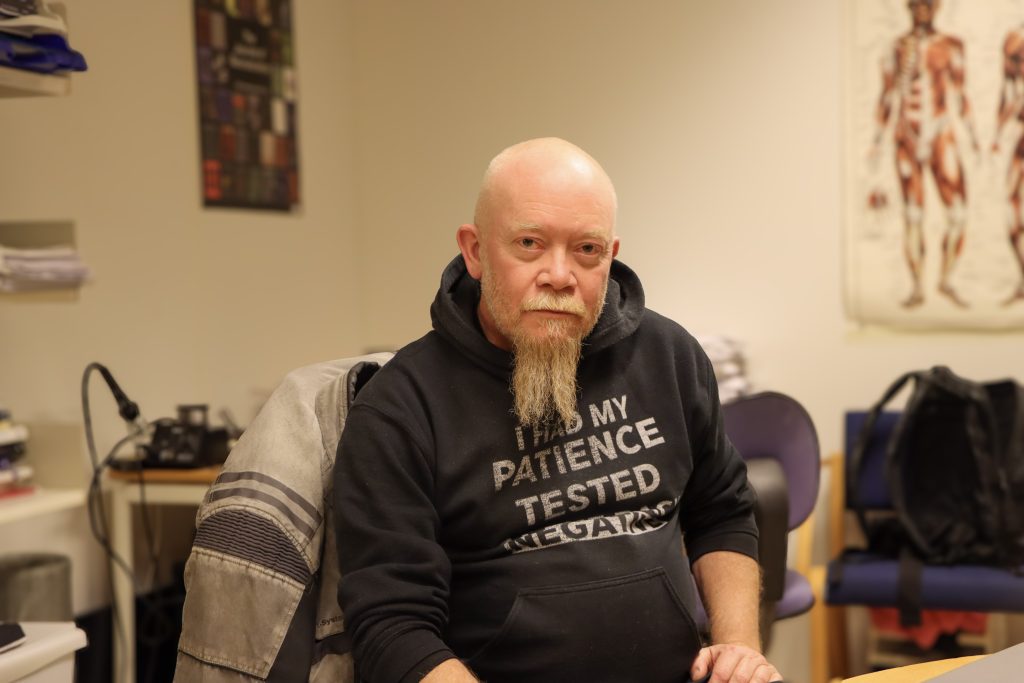
Her belief is shared by Stig Hollup, a neuroscientist at NTNU. In addition to teaching, Hollup works with EEG measurements (brain scans). During a scan, anomalies in the brain can be observed, including traits associated with ADHD, such as impulsivity and difficulties with concentration.
Photo: Nikolai Auestad Horn
ADHD is defined by psychologists and diagnostic manuals based on traits like impulsivity, hyperactivity, and attention difficulties. But what exactly is ADHD? To explain, Hollup refers to the 1994 reform — a reform that truly brought ADHD into the light.
The Reform in 94 changed vocational education by introducing a requirement for theoretical subjects alongside practical training. This meant that bricklayers had to learn subjects like English, and economy, this lead to a rise in ADHD and dyslexia diagnostic, because they were forced to follow a path that they did not want to follow.
Stig Hollup Neuroscientist NTNU
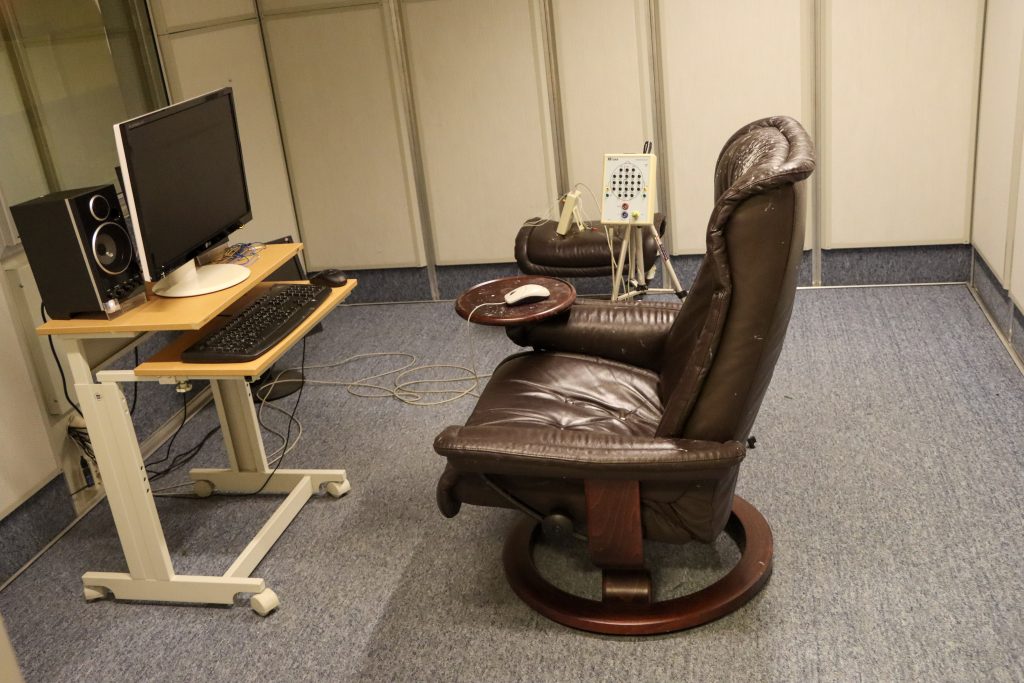
EEG measurement tool that can detect brain activity patterns associated with ADHD.
Traits like hyperactivity and impulsivity are not problems in themselves; they only become problematic when they clash with societal rules or create difficulties for others. The first humans who left the “caves” and explored the wilderness were likely individuals with poor impulse control and/or bad judgment. Without them, we probably wouldn’t have made it this far. Unfortunately, in modern society, these traits are not always understood or appreciated, Hollup says.
Impulsivity and hyperactivity are not necessarily negative traits; they can be qualities that drive people forward. Difficulty with concentration isn’t necessarily just a problem — it often reflects a mind that thinks differently, in ways others might not. And it’s precisely these traits that can make neurodivergent individuals exceptional entrepreneurs, according to Hollup. But Hollup also has a warning for entrepreneurs with ADHD.
Every superpower comes with a weakness; impulsivity comes with reckless actions, especially in relation to economy.
Stig Hollup Neuroscientist NTNU
Entreprenourship education
Haukland initially wanted to write about the student environment around the entrepreneurship education, but after her diagnosis she wanted to write about something she was truly passionate about. Therefore, she shifted her focus to how education — and especially entrepreneurship education — could better support neurodivergent students.
A lot of entrepreneurs with ADHD underperform, but if they have an education they are far more likely to perform well, according to Haukland. Therefore, entrepreneurship education could be a powerful tool for developing neurodivergent students’ skills in innovation and problem-solving, and it could be a great tool on the path to becoming an entrepreneur. Neurodivergent individuals have, as Hollup emphasizes, a lot of potential — if they have the right tools around them. Haukland believes these same traits can be leveraged in education, particularly in entrepreneurship programs.
A call for change in education
Higher education is a big step up from high school. For the first time, students must create their own study plans entirely on their own. In just four months, they need to learn the entire curriculum, culminating in a final exam that determines what they’ve truly mastered. Students with ADHD often have difficulty organizing tasks and adapting to the way education is commonly taught today. Haukland strongly believes that education should be more inclusive so individuals with ADHD can master it better. She argues that education should strike a balance between structure and flexibility.
Today’s education system feels more like a choice than anything else. We’re educating students as if they’re going to work in a factory, where everyone is getting the same knowledge. We don’t focus enough on how students actually learn, it seems like we’re choosing the easiest path for lecturers and teachers.
Cecilie Haukland SFU Engage Nord University
Photo: Marthe Mølstre
Haukland is clear: action-based learning is the way forward. Entrepreneurship education already incorporates a lot of this through case work and pitching, but there is still room for improvement. Case work in particular has been shown to activate hyperfocus in individuals with ADHD. The education also provides students with a valuable meeting point, where they can pitch ideas and connect with industry professionals. These interactions have proven to have a positive impact on the students as well, according to Haukland.
Haukland believes that education should be like a building: designed so that everyone can access it. Just as buildings are constructed to welcome and support all who enter, education should be built to include and empower every learner. The key is universal design.
Key tips for students with ADHD
For students with ADHD, Haukland offers several key pieces of advice:
It’s okay to postpone.
Set a deadline! If you don´t have a formal deadline, set it yourself.
Don´t start until your ready. What´s the point of stressing before you start, why not start when your truly ready?
You can compare it to trying to cut down a tree with a butter knife. Sure, it might work, but it’s far better to wait until the chainsaw arrives.
Cecilie Haukland SFU Engage Nord University
Hauklands method:
In her research, she has among other things used the Delphi method. This approach involves collecting knowledge and opinions from a panel of experts, particularly in cases where there is limited prior research in the field.
Haukland’s panel consisted of students with ADHD, entrepreneurs with ADHD, as well as psychologists, educators, and researchers in entrepreneurship. She combined quantitative data with in-depth interviews to arrive at her findings.
In August, several promising teams pitched their ideas to a panel of entrepreneurship experts, showcasing innovation and ambition.
This year, AIMSES earned the spot to represent NTNU at Stage Two. AIMSES is a spin-off originating from NTNU’s Technology Transfer Office, led by Hossein Eyha. The start-up builds on cutting-edge research and development conducted by Hossein and his team at NTNU.
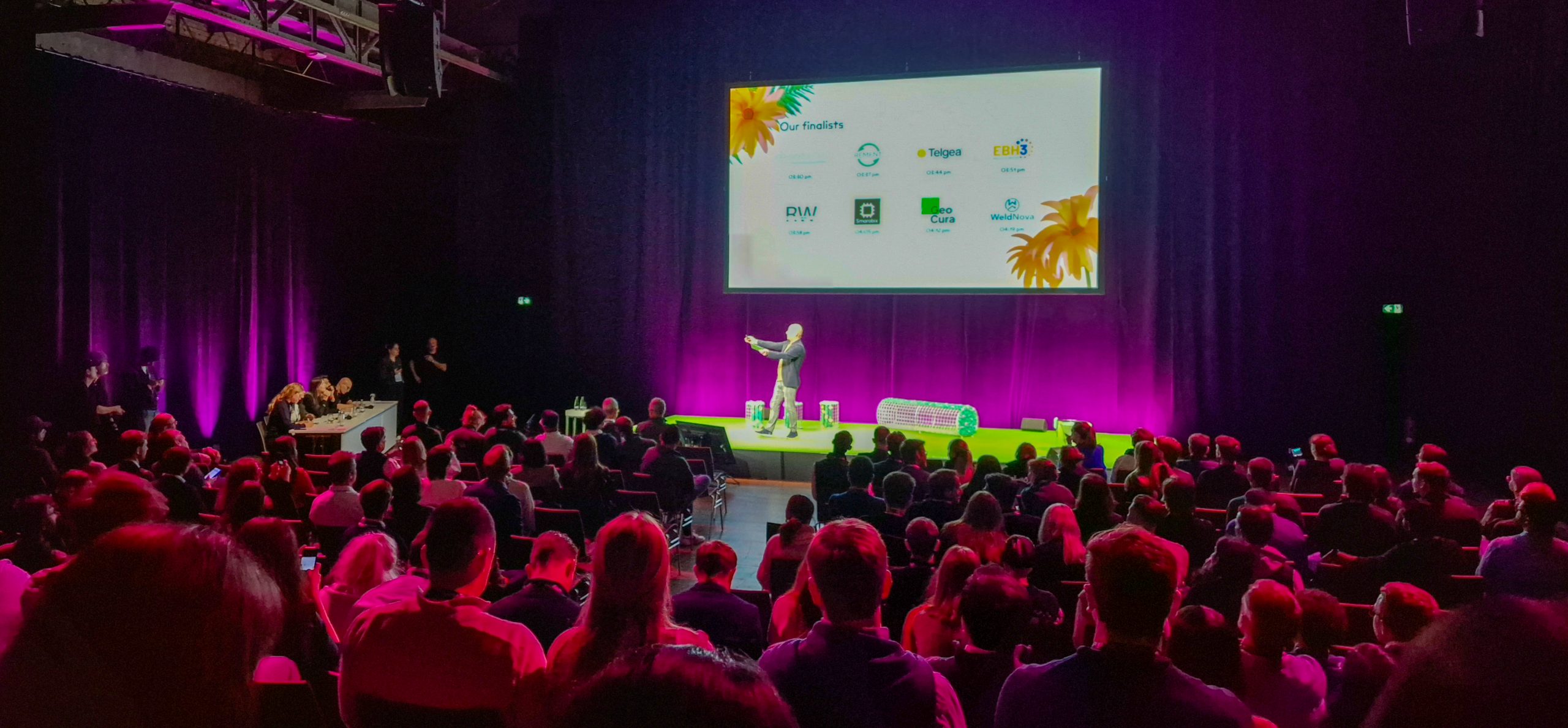
At Stage Two, Hossein delivered a compelling two-minute pitch, impressing both the jury and potential investors. His presentation was clear, structured, and impactful—earning AIMSES valuable attention and networking opportunities.
Hossein pitching AIMSES in 2-minutes.
Inside Stage Two
The event spans two days:
– Day One focuses on workshops for start-up founders, entrepreneurship centers, and investors, offering insights into scaling, funding, and collaboration.
– Day Two is all about competition. Over 40 start-ups presented their two-minute pitches, followed by a grand finale where investors expressed interest through indicative investment offers (subject to due diligence).
Trends at Stage Two 2025
According to Dag Håkon Haneberg, “Roughly three-fourths of start-ups this year were Deep Tech. Even the business track, traditionally focused on business model innovation, was dominated by technology-driven solutions. Deep Tech means innovation rooted in new technological development rather than incremental changes in business models.”
Ingrid Berg Sivertsen added: “We saw several start-ups tackling established industries with advanced research-based solutions—such as concrete recycling, new welding techniques, water purification, and desalination for drinking water. Sustainability was a strong and genuine theme across the board.”
Javier Silva Mora pitches for Porelio.
What is a University Spin-off?
As Dag Håkon explains: “University spin-offs are companies that leverage knowledge from the university as a core resource in their value proposition.” He also noted that sustainability is now a fundamental part of these ventures—not just an add-on.
Interestingly, the landscape has evolved since NTNU first joined Stage Two in 2021. Back then, most cases were student-driven. Today, we see more start-ups based on employee innovation, sometimes involving students, but not exclusively.
Competition day, the hosts for Stage Two welcomes participants.
Why Engage?
For Engage, Stage Two is an invaluable opportunity to connect with the European innovation ecosystem, gain insights into emerging trends, and strengthen our network. It’s a fantastic way to bring knowledge back to our community and inspire future entrepreneurs.
From left to right; Dag Håkon Haneberg (SFU Engage), Hossein Ehya (AIMSES), Kristian Rathe (NTNU TTO / AIMSES) and Ingrid Berg Sivertsen (SFU Engage).
SFU Engage offers financial support for students that wish to travel to other (student) innovation ecosystems to bring back inspiration to their own innovation ecosystem.
The student or student team must map the ecosystem on behalf of SFU Engage while SFU Engage provides financial support for travel costs. The goal of this project is to compare other innovation ecosystems with the one at our home institution. By exploring similarities and differences, we hope to identify opportunities for collaboration and spark new initiatives within our own ecosystem. The recipients of financial support should therefore be involved in, or have experience from, the student innovation ecosystem at either NTNU or Nord University. The students will act as ambassadors representing both SFU Engage and their own student innovation ecosystem and will be briefed before travelling to their destination. Students at all levels (bachelor, master or PhD) are welcome to apply.
The ecosystem mapping should be conducted in connection with other travel purposes (e.g., a conference, workshop, or course). In addition to providing information about other innovation ecosystems, this reduces total travel costs and the impact of travelling – a win-win-win situation! The maximum amount of funding per application depends on the destination: 7.500NOK within Europe and 12.500 NOK for other continents.