Are you interested in how stories and lessons from business and entrepreneurs become learning tools to give students important skills and competence? See you at the book launch!
Edited by: Karin Wigger, Assistant Professor of Industrial Management, Linköping University, Sweden and Associate Professor of Entrepreneurship, Nord University Business School, Nord University Lise Aaboen, Professor of Technology-Based Entrepreneurship, Department of Industrial Economics and Technology Management, Norwegian University of Science and Technology (NTNU) Dag Håkon Haneberg, Associate Professor of Entrepreneurship, Department of Industrial Economics and Technology Management, Norwegian University of Science and Technology (NTNU) Siri Jakobsen, Associate Professor of Innovation, Nord University Business School, Nord University Thomas Lauvås, Associate Professor of Innovation, Nord University Business School, Nord University, Norway
Artic Ignite is a yearly accelerator program located in Tromsø, Norway. The event is held under the aegis of Norinnova, in collaboration with the Norwegian Ministry of Foreign Affairs. Every year ten lucky start-ups are selected to take part in the program, where each participating start-up receives NOK 100.000 in starting capital for the development of their business idea. At the end of the program three start-ups receive development grants of half a million NOK each, based on the companies’ pitches on stage. In addition, the participating start-ups can be awarded the “People’s Prize”, consisting of another NOK 500.000.
Nowadays, raising capital might be difficult for young entrepreneurs with a business idea in Northern Norway, a challenge Arctic Ignite tries to address. Their mission is to facilitate for more start-ups being able to develop their business ideas in Northern Norway, reaching out to young, talented entrepreneurs based in the region. As part of the accelerator programme, the carefully selected participants are given an opportunity to attend two different gatherings, encountering a panel of experts fully focused on their ideas. Furthermore, they get access to relevant networks and are given an opportunity to present their ideas in front of a jury during the final event.
Hermann Schips, Christoffer Joys Røang, Ole Jørgen Thue Holthe and Johan Ludvig Holst at Arctic Ignite, Tromsø.
Kelpinor
Kelpinor is a marine technology start-up originating from NTNU, focusing on kelp farming for the future. They have developed a cultivation technology that reduces costs of kelp production by up to 40%, in comparison with current methods. The company has ambitions to grow 10,000 tonnes of kelp by 2027, which is 10 times the current total production in Norway. On their journey towards achieving this goal the company starts production of kelp in January 2023, after Kelpinor’s first production plant is launched in the sea outside of Sandhornøy in Gildeskål in November this year. This plant has the size of 8 football pitches, and 10 tonnes of kelp will be harvested during the summer of 2023. The funds from Arctic Ignite will play a very important role in enabling them to achieve their goals in the years to come.
The Kelpinor team in Tromsø after the award ceremony at Arctic Ignite.
The jury was greatly impressed by Kelpinors’ pitch on stage, and awarded them the “Jury’s Innovation Prize” of half a million NOK. And as if that wasn’t enough, they managed to win the “People’s Prize” as well – a prize consisting of another half a million NOK, decided exclusively by the public. We would like to express our deepest congratulations to Kelpinor, and cannot wait to follow their journey in the time to come!
On the 21st of September, the event “Together to: Innovate” was held for the very first time, as part of NTNU and The Mine’s partnership with Equinor. The first prize was 300,000 NOK, and students across all disciplines had the opportunity to participate and compete against other students. The competition’s only criterion was that the students could present a concrete idea, project, or start-up that can positively contribute to the energy transition. In addition, the winner gets access to Equinor’s professional expertise and counseling for three months.
By William Husby Hoven
The overall ambition of Engage is to develop students’ entrepreneurial skills at the higher education level, to become change agents in all contexts. As a way of achieving this goal, we connect today’s students with the business world – in this way, we can contribute to solving the challenges of the future. The innovation award “Together to: Innovate”, in collaboration with Equinor, was an arena where students were given an opportunity to present their green ideas in front of a professional panel. It will require a lot from us as a society to succeed in the green transition, and the energy sector in particular will play an important role in the years to come. Therefore the students were encouraged to pitch their green ideas, projects, or start-ups – innovations that can contribute to the energy transition and Equinor’s journey towards net zero.
Brilliant, green ideas for the future
Originally there was 300.000 NOK as the main prize at “Together to: Innovate”, to be handed out to the winning group of the competition. On the contrary, the panel was so impressed by the green ideas and solutions presented by the competing students, that they couldn’t decide on just one winner. Therefore they chose two different start-ups as winners of the competition, and both start-ups received 300.000 NOK each from Equinor. Additionally, the third prize received 100.000 NOK for their project. The winning start-ups of the competition were Versiro and Kelpinor, congratulations!
Versiro and Kelpinor – the two main winners of the competition.
We had a talk with Kelpinor from the NTNU School of Entrepreneurship, a marine technology company. Kelpinor has developed a method for harvesting and launching kelp, enabling economies of scale. Kelpinor has high ambitions and aims to produce 5.000 tonnes of kelp by 2027. Here is what the CEO of Kelpinor, Hermann Schips, had to say about the importance of reaching the top in the competition:
“The competition was a lot of fun! Going all the way to the top wasn’t something that we had expected. When we realized that we were among the finalists, we thought: Yes! Because then we knew that we would have access to Equinor and their professional expertise for three months. And that is of an infinitely greater value than the cash prize itself. At the same time, winning the main cash prize of 300.000 NOK, will be of enormous importance to us as a start-up company. It’s so important that the things we want to achieve with Kelpinor, now suddenly become much more achievable.
But maybe the most important thing for us about winning the competition is that we have gotten recognition for the great number of hours and efforts that we have put into the company. We often dedicate more than 60 hours weekly to our project, and it is a fantastic feeling to get a confirmation like this stating that we are heading in the right direction.”
Hermann Schips, CEO Kelpinor
The Mine – the center of innovation in Trondheim
Furthermore, we asked Hermann to elaborate on NTNU’s strategy on the development of The Mine as an innovation centre and the importance of building bridges between students and the business world. Here is what he had to say:
“I think NTNU’s strategy of building The Mine as a centre of innovation connecting students and the business world together, is very solid. The fact that we as students see real issues, and face real businesses that want these issues solved, is fundamental for our development. And having The Mine as a hotspot, where it’s completely safe to ask about anything and to seek advice from people with a great competence in their field, is invaluable. And I think that Engage acts as a strong driving force in accomplishing this mission, in a very positive way.”
Hermann Schips, CEO Kelpinor
When we are talking about innovation in Trondheim, The Mine is the number one place to be. It is located at Gløshaugen NTNU, and is the heart of everything there is related to innovation within the city of moustaches: Trondheim. Here we gather students, employees and the business world, so that everyone is working together in developing the best solutions for the future. The presence of external businesses within the innovation environment in Trondheim, is of great importance. The insight of the business world is crucial for students in the processes of developing the best solutions that the world desperately needs, especially regarding the green transition. “Together to: Innovate” and other similar events are also of great value for the business world itself. The innovation environment in Trondheim is home to a great number of clever ideas – some of them might even solve challenges that the businesses themselves aren’t aware of yet.
We also talked to Charlotte Sørensen, who is Head of student engagement at Engage. She has been one of the key persons in the build-up and development processes of The Mine and the innovation environment in Trondheim as we know it today.
Charlotte Sørensen, Head of student engagement
“In order to have the innovation environment in Trondheim at its best, we are completely dependent of collaboration between students, employees and the business world. At The Mine we currently have four partners: Sparebank 1 SMN, our main partner, Equinor, DNB and Element Logic. Firstly, one of the reasons for why we want to include externals at The Mine, is because we want the students to face and to be working on actual challenges. Furthermore, so that they can provide expert knowledge that we need. Lastly, it’s fundamental to connect the students with businesses at an early stage. Not only for the students themselves, but also for the businesses. After all, the students of today are the ones who will be solving the issues of tomorrow.”
Charlotte Sørensen, Head of student engagement at Engage
In addition, Charlotte was heavily involved in the processes of planning the event along with Equinor. As part of their mission of reaching net zero as a company, Equinor is searching for new, green ideas. Therefore, in collaboration with Engage and NTNU, Equinor has launched the new yearly event “Together to: Innovate”, in order to facilitate for green entrepreneurs with great ideas to succeed. To sum up, overall the event was a big success, and Equinor were greatly impressed by the students’ efforts and their green ideas. We are already looking forward to next year’s event!
Entrepreneurship education engaging students to improve healthcare!
By Gunn-Berit Neergård, researcher at SFU Engage
In august, the graduate students of nursing education at NTNU were invited to participate in a three-day innovation camp. The students were introduced to innovation, entrepreneurship, authentic challenges by industry actors and collaborative team work. The camp ended with a pitch competition after four intensive days of working with healthcare challenges in the Norwegian context.
The NTNU nursing faculty has provided this camp to their students for six years, with various stakeholders and pedagogical solutions – for instance by throwing an online innovation camp during the Covid-19 shut down of society in 2020. For 2022 they had given the students the choice of participating – the camp was no longer a mandatory part of the education to earn a bachelor’s degree in nursing. This seems to be an interesting pedagogical choice that might be fruitful; at 8AM more than a hundred nursing students found the innovation camp relevant to their careers as future nurses, and attended the lectures in the big auditorium at Øya helsehus. Being there by their own choice might influence the atmosphere and cause less resistance than mandatory participation. This is for sure an interesting pedagogical test, knowing from research that «forced» participation in innovation camps for nursing students has come with some protests and negative attitudes among students. As another interesting change, the faculty is now exploring a four-day programme as compared to a previous three-day programme. This is also a change that might suit the students well, as previous research show that students experience three-day camps as too short, with few real opportunities to gain knowledge about authentic challenges and potential solutions. It is impressive to see the faculty implement such research-based pedagogical changes!
Engage has been present at the innovation camp with lectures and student mentors from Spark* since the very beginning in 2017. This year, researcher and nurse Gunn-Berit Neergård opened the camp with an introductory lecture about entrepreneurship. She also shared her story becoming an entrepreneur through the NTNU School of Entrepreneurship. She was very happy to be ‘back home’ at her old campus, where she earned her bachelor’s degree in nursing!
Engage look forward to following the innovation camp for nurses in the years ahead, and wish the students and faculty all the best with this year’s camp.
Interested in research about entrepreneurship education for nursing students?
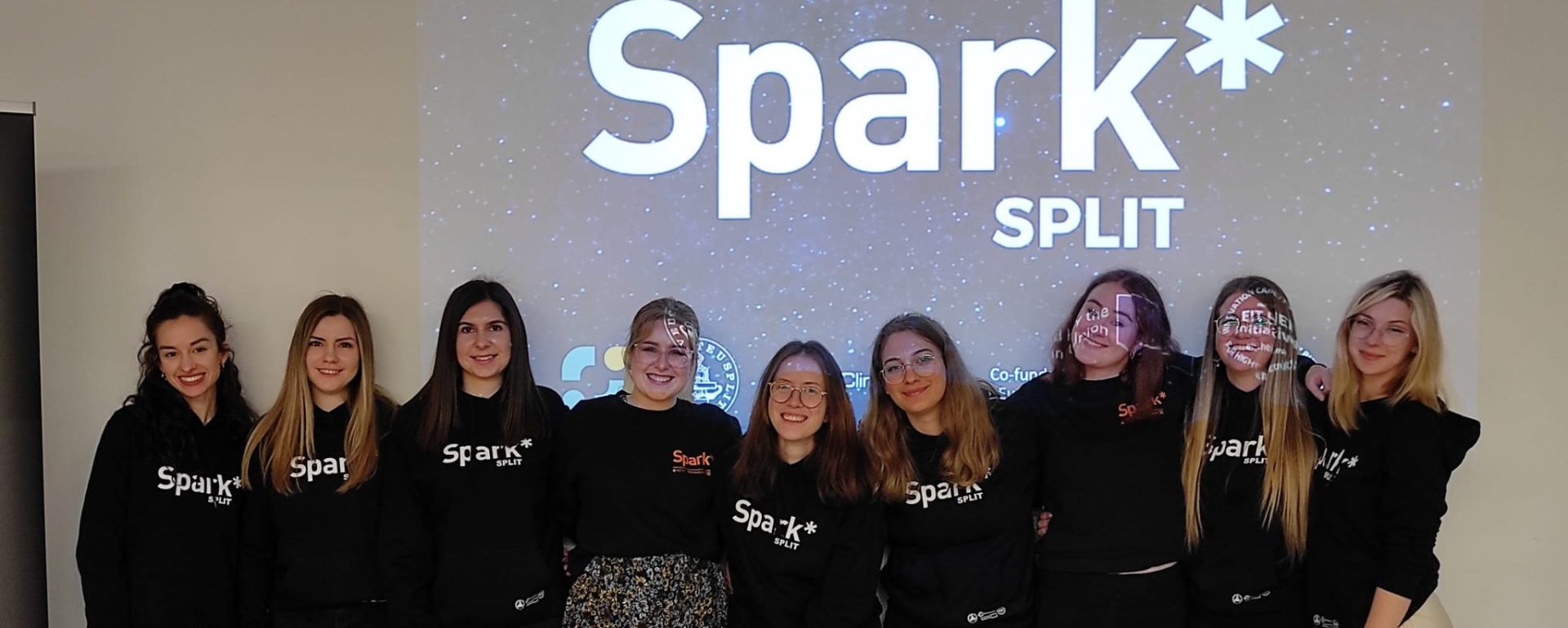
Spark* Split was started this fall as a part of the CHIC – Creating Holistic Innovation Capacity project. The team gathered for the first time in november, and started building their organization from there. Spark* Split has come far since their start in november. Since then they have grown as a team, recruited their first mentees, and started a collaboration with a local startup to learn even more about entrepreneurship in practice. The event was a great way to tell the rest of the university what Spark* Split is all about.
The Spark* Split team organized an event that reflected the core values behind Spark*. The team got the chance to talk about how Spark* will look in Split, what mentoring is like, and their journeys as entrepreneurs and mentors. After the event there were also opportunities for networking between students, and faculty that had shown up. The Engage team go the chance to talk about how Spark* is organized at NTNU, and why it is a success here. We also got the chance to talk a little bit about maritime innovation, and how students have started their very own maritime startups. The maritime sector is big in Split, so many of the students had interesting thoughts on the topic. The turnout of the event was even better than expected according to both the faculty and the students. Their theory behind this was the fact that this was a student-led initiative.
Spark* event in Split exceeded all of my expectations. We had many positive responses from everyone present at the event which gave us a huge boost in confidence to keep going forward. Holding an in-person event for students was the best way of introducing such an initiative. It made everything feel more ‘real’ and, through engaging participants, we motivated them to step up a bit and think about some of their ideas – no matter how big or small they may seem to them.
As stressful as it was to start a student initiative and an event from scratch, we were fortunate enough to have Spark NTNU mentors and the University of Split by our sides to help us with every obstacle in the way. Hopefully, we will keep going strong and successfully keep spreading Spark* among students at our University.*
-Sara, Leader of SparkSplit*
We also got the chance to hold an internal workshop for the team. Focusing on how their progress is going, and also how they could work together as a team. The team also got the chance to reflect around the value of Spark, and how Spark could be valuable for potential sponsors. The team had so many different inputs, and ideas on why Spark* is such a valuable initiative. Their thoughts were insightful, and something that will be useful for the future of Spark* Split.
We are excited to keep following Spark* Split in the time coming, and to continue to learn from eachother’s experiences in the future!
Engage SFU is hosting an intensive two-day UNIPED-module, where the participants will receive an introduction to entrepreneurship and how this can be implemented and integrated into existing and new courses. The course language is Norwegian, and you must expect lectures and group discussions in Norwegian. The assessment will be based on an oral presentation in the end of the module. For more information, look in the Norwegian description below.
Entreprenørskap for bedre undervisning – intensiv UNIPED-modul i juni og september
Entreprenørskap er et «hot topic» i høyere utdanning, og skal implementeres i en rekke disipliner i tiden fremover. Er du en av dem som må, bør, eller vil lære mer om entreprenørskap? Da er denne modulen for deg. Engage SFU arrangerer nå en intensiv to-dagers UNIPED-modul for undervisere ved NTNU, hvor deltakerne får en innføring i entreprenørskap og hvordan dette kan implementeres og integreres i eksisterende og nye emner.
Hva er entreprenørskap?
Entreprenørskap har tidligere vært assosiert med store byggeprosjekter og anleggsarbeid. I realiteten omfatter entreprenørskap prosessen der man skaper ny verdi for andre, og det kan ta form som en innovasjon eller en ny organisasjon. Med entreprenørskap setter vi enkeltmennesker i stand til å reagere på utfordringer i samfunnet og skape endringer – ny verdi – for en bedre verden. Entreprenørskap er derfor viktig i flere kontekster, med stor relevans i alle disipliner. Det «entreprenørielle tankesettet» til en entreprenør er verdifullt i en rekke situasjoner. Det kan benyttes i oppstart av nye selskaper og ved utvikling av nye løsninger i etablert industri, arbeidsliv eller i samfunnsmessig sammenheng. Entreprenørskap er dessuten et nyttig verktøy for å kunne nå FNs bærekraftsmål. Det entreprenørielle tankesettet spenner derfor bredt og er aktuelt i alle disipliner – blant annet er det sentralt i både Fremtidens Teknologi- og HUMSAM-studier.
Entreprenørskap i egen kontekst
Denne UNIPED-modulen vil gi undervisere en introduksjon i sentrale faglige konsepter for entreprenørskap. De vil lære om et entreprenørielt tankesett, verdien av dette i ulike fagdisipliner, samt få en innføring i SFU Engage sitt utdanningsrammeverk for utvikling av studenters entreprenørielle tankesett. Gjennom diskusjoner og gruppearbeid jobber deltakerne med å overføre innholdet fra kurset til egen undervisningspraksis. Mot slutten av modulen utvikler og gjennomfører deltakerne hver en kort undervisningsøkt der innhold fra modulen integreres med eget fagfelt. Deltakerne i modulen vil etter gjennomføring kunne utvikle egen undervisnings- og utdanningsaktivitet slik at entreprenørskap kan bli en naturlig del av den faglige aktiviteten. Blant annet vil Engage sitt utdanningsrammeverk være sentralt i modulen. Slik vil undervisere som deltar kunne integrere faglig aktivitet innen entreprenørskap som er tilpasset egen utdanningsdisiplin og -kontekst.
Datoer: 20. juni – 21. juni 2022
Klokkeslett: 09:00-16:00 begge dagene
Sted: Gløshaugen, Trondheim
Påmeldingsfrist: 1. juni
Påmelding via Kurskatalogen i NTNU Læringsportalen her.
En tilsvarende modul vil bli gitt 6. og 7. september 2022.
Engage sitt utdanningsrammeverk:
Act – Engage with doing
Interact – Engage with others, partners or stakeholders
Challenge – Engage with the world outside the university
Embrace – Engage with and handle uncertainty
Reflect – Engage with internalising knowledge and skills
Once again we are proud to invite the top 12 student-driven startups from NTNU to meet a selection of Norways foremost early phase investors.
Together with Sparebank 1 SMN and 6AM Accelerator we are glad to be able to repeat last years success; the NTNU Student Investor Day! This year – however – it will be bigger, better, harder and even more fun!
Every student-driven startup from NTNU are invited to apply for the event according to the application critereas are listed below. Of the applicants, 12 startups are selected to attend the event where they will get to pitch their business idea and be a part of an intense speed-dating round with a selection of Norways foremost early phase investors.
When?
29. April 2022
12:30 – 14:00 Introductions and pitching 14:15 – 15:30 Speed dating 15:30 – 18:30 Prize ceremony, food and drinks
What?
5 minute pitching from startups 5 minute speed dates between startups and investors Prize ceremony Mingling, food and drinks
Where?
Gruva, Oppredningen, NTNU Gløshaugen Sem Sælands vei 1, 7034 Trondheim
Who?
Student-driven startups from NTNU Norwegian early phase investors.
Prizes?
Total of 150.000 NOK! Participation in the Stage Two-competition in Berlin! Participation in the 6AM Accelerator program!
NTNU Student Investor Day is intentionally set to the same date as “Tech, Hugs & Rock’n Roll”. We hope that as many as possible of you will join us continuing the evening there, celebrating the entrepreneurial ecosystem in Trondheim!
More info about Tech Hugs & Rock’n Roll can be found here: https://www.facebook.com/events/904124110515459
Why NTNU Student Investor Day?
The goal of NTNU Student Investor Day is to create an arena for student-driven startups at NTNU to meet investors, and vice versa.
In doing so, we aim to facilitate for the startups to learn more about what investors look for. Even more so, we want to aid the startups to start a dialogue with investors early on – hoping that it will be a stepping stone for them to raise the capital needed to build a sustainable business.
Applications are sent as a simplified business plan where all elements listed below should be addressed. You choose yourself how the format and structure of the business plan are. The deliverable should be maximum 10 pages, and may be written in English or Norwegian.
Executive summary A summary of your business plan
Business idea What is your concept, product or service? What makes it unique, is it scalable, is it doable, is it new?
Team Who is behind the idea and why are you fit to succeed?
Market analysis and plan Who is your customer, user and what market need you fulfill? How large is the market, who are the players in it, and how can you address it? Business model and value chain analysis What does your business model look like, and where do you place yourself in the value chain? Action plan How do you plan to move forward?
Profitability assessment How profitable is your business the next five years? How much capital and liquidity do you need to reach your goals, and how will you finance it? Risk assessment What risks does your business face, and how can you address them?
Applications are sent to henning.p.patricksson@ntnu.no within the 7th of April 23:59.
About Stage Two
Stage Two 2021 will be hosted at Technische Universität Berlin fall 2022. Stage Two gathers early stage startups pre-selected by university-affiliated entrepreneurship centers during university rounds. The best two startups of each university will pitch live at Stage Two in front of European top investors & industry leaders.
Facts:
25+ top universities, 25+ VCs and industry leaders
Best 50+ early stage startups from 15+ European countries
Aviant was formed at MIT where the three founders met during a year abroad from NTNU. Lars Erik Fagernæs the data technology student, Bernhard Paus Græsdal og the Cybernetics and robotics student and Herman Øie Kolden studied physics and mathematics. They needed financial support and entered TrønderEnergi-Bidraget in order to win capital for the establishment. They were rejected as the panel did not believe that three students would be able to make autonomous transportation drones.
– It sounds insane that three students are trying to make autonomous transportation drones and so we had to ask ourselves are we crazy for thinking we can do this, but we wanted to try, says Lars Erik Fagernæs .
No one believed in them, so they collected their savings in order to make a prototype that cost 30 000 NOK. The prototype worked and made people see their potential which led them to receive TrønderEnergi-Bidraget, financial support from NTNU Discovery and even a research collaboration with St. Olav.
– Today we have four paying contracts, a certification from EASA and we have flown the drone from Røros to Trondheim which is the longest autonomous flight ever done in Norway at 120km, says Lars Erik.
The tree founder of Aviant
I have never experienced anything like it, it was such a stressed atmosphere backstage, we must have looked schizophrenic talking and pitching to ourselves repeatedly.
Lars Erik, Founder and CEO Aviant.
From Stage one to Stage two
October 29, 2021, over 2000 people participated in Stage two; the first European competition dedicated to finding the best startups across leading European universities. The competition is held in Berlin each year where 30 of the leading universities in the entrepreneurial field send two startups each to compete for investment in their companies. To find which startups to represent each university a local competition is arranged called Stage one. At NTNU this was Student Investor Day where the victory went to the Drone-startup Aviant and Tech-startup Enernite.
From Stage two in Berlin
Pitching to victory
Stage two was in typical Berlin underground style held in an abounded factory. There were two stages, and the contestants were divided into four groups: Business innovation #1 and #2, and Tech innovation #1 and #2. For the first rounds each startup had 4 minutes to pitch their innovation before the panel. The panels consisted of some of the most prominent early-phase investors in Europe.
– I have never experienced anything like it, it was such a stressed atmosphere backstage, we must have looked schizophrenic talking and pitching to ourselves repeatedly, says Lars Erik.
Enernite seemed to be the crowd favorite and won the Digital audience award, voted through by the Digital audience. Aviant proceeded to win the prize of Best Business Innovation by STS ventures, which came with an investment prize of two million NOK. This price will only be invested if Aviant and the investors can come to an agreement and CEO Lars Erik explains that nothing is decided yet. Along with the price other potential investors have emerged and Aviant is growing further. -There has been a lot of interest in the wake of stage two and so we need to access a lot of the offers and act soon while we still have the edge from the competition, says Lars Erik.
Achieving business status
Aviant is a success story on continuing your path even if no one believes in you. CEO Lars Erik explains how it has called for self-sacrifice and hard work, but encourages others interested in entrepreneurship to go for it.
– I feel Janteloven stand in the way of many future entrepreneurs because it leaves us afraid to fail. I think it is important to stere away of this thinking and just make the way as you go, says Lars Erik.
Today Aviant has four paying clients, and their current goal is to deliver on those contracts in order to grow further. They are already expanding the business by adding four new members to the team so that they can reach their long-term goal of becoming leading in autonomous drone transportation across Europe.
– It is important to become an entrepreneur because you love what you do, not to become rich and famous, because most likely you want to achieve either, says Lars Erik.
In the recent student start-up contest StageTwo in Berlin, start-ups from NTNU went all the way to the top in strong competition from other start-ups from all over Europe.
By Torgeir Aadland, Co-director Engage and Associate Professor, NTNU
Aviant won the prestigious Best Business Innovation, awarding them € 200k in funding. Another start-up from NTNU, Enernite, won the audience award and € 5k. Both start-ups also won awards in the Accelerate category. More than 60 start-ups from 30 universities in 18 countries participated, so how come this great performance from NTNU?
Give students space at campus
One important factor contributing to the development of excellent start-ups is the long-term development of our entrepreneurial ecosystem. NTNU has developed its student-centred entrepreneurial ecosystem extensively in the last ten years, where actors focusing on entrepreneurship, innovation and sustainable development have emerged. Examples here are Spark*, Fram, Driv and Gründerbrakka (alumni-led incubator). The organisations have been given space at campus, and a few weeks ago, the university opened Gruva, the last addition to the innovation hub at NTNU. This space is a test centre for student entrepreneurship and innovation. By giving the students a space where they could meet, collaborate and develop ideas among their peers, the environment has been able to foster.
Faculty as door-opener
The organisations mentioned above are made by students for students, however, they have at the same time received vital support from the university’s faculty and administration. The organisations have been aided by senior faculty and managers through the maze a university’s organisation might be. They have received funding and resources to test their ideas and evolve into attractive organisations, which in some cases have been adapted into other universities. The faculty has therefore been a vital door-opener, but the students have walked through on their own.
Torgeir Aaadland, Co-director Engage and Associate Professor, NTNU
Let students have the ownership
While such an ecosystem is many administrations and faculties’ ambition and goal, NTNU has to a little extent shaped the design of the ecosystem. The support has mainly focused on helping the students financially to start a sustainable, long-term and independent organisation, event or initiative. As such, the ownership of the initiatives lies with the students, not the faculty. The activity and content of the organisations are thereby shaped by the interests, needs and wants among the students. The faculty supplies the material, the construction is the students’.
Although numerous other factors are influencing the performance of start-ups by students, the active ecosystem, supporting faculty and ownership of the activity with the students, all stand as vital in the development of excellence among our start-ups. It is therefore difficult to develop the ecosystem as a manager or faculty. It needs support, but at the same time autonomy and ownership among the students. You cannot decide when the flower will bloom, but you can facilitate the blossom.